
A Guide To Nairobi Gymkhana
Nairobi Gymkhana is one of the most popular cricket grounds in Kenya and goes down in history as having hosted two matches during the 2003 Cricket World cup. It has a has a capacity of 7,000 people and is the home of one of Kenyas oldest cricket team, Nairobi Gymkhana.
The Foundation stone of Nairobi Gymkhana, then the Suleman Virjee Indian Gymkhana, was laid on 4th April 1928 by Sir Edward Wright, Governor of Kenya. The Opening ceremony was performed by Mr. B.S Varma, Deputy president of East African Indian National Congress on 19th October 1929.
The years 1976 & 1977 saw the Club undertake the first major developments which were to follow in the ensuing years. Our present swimming pool and the adjacent changing rooms were built and which saw the Club gradually change to a ‘family Club’. In 1980 and 1981, the present squash complex and the Snooker room were built. The Official opening of this building was done by Hon. Charles Njonjo, the then Minister for Constitutional affairs.
The funding of this project was supported by a successful raffle which was launched in that year. 1984 saw one of the most ambitious projects of Nairobi Gymkhana take off the ground. The original Club house which previously stood on a smaller perimeter of land was converted into what stands today as the Main Club House housing a Modern lounge and bar, and extended card room, the nee administration block, an international standard badminton court and the modern Cricket pavilion, which even today the Cricket bodies of the World finds it to be of ICC Standards.
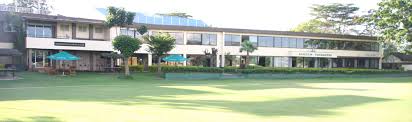
The Official opening of the Main Club House was performed by the then Acting Chief Justice C.B Madan on 30th May 1986. In 1987, the Club’s Boundary line beacons last surveyed in 1923 were established. The year 1991 saw the construction of the Residential complex and the dining room. The facility was further upgraded in 1996 when 8 more rooms and 2 suites were constructed on the first floor of the building.
The central reception area was constructed in 1992 during which time the underground water storage facility was improved and a new borehole dug. Sitting stands were constructed at the Cricket field in 1993 and a water tank was constructed at high level to ease water deficiency in the Squash Courts.
The Bull’s Eye Bar in the Swimming pool area was constructed in 1995. In 1996 the Club completed phase one of the Cricket stadium with a sitting Capacity of 4000 pax, thus making it the most modern cricket stadium in East and Central Africa. In 2003, the Banda project was completed and started operations in April 2003 and since then has shown a steady following for members who wish to have self cooking gatherings.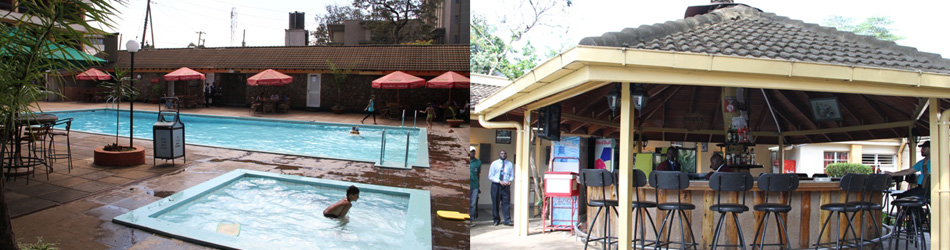
Accomodation in Nairobi Gymkhana
Our rooms are quite Spacious with superb décor. Each room is equipped with a Flat TV connected to both Satellite and Cable TV Networks. 95% of the Rooms face the Swimming pool which gives a perfect ambience for an outdoor feel.
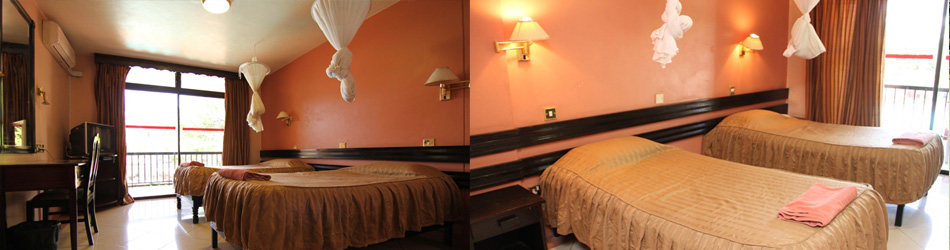
We also have a cozy Cottage which is most suitable for families and large groups of persons travelling together. The Cozy Cottage is a fully functional and furnished 4-bedroomed House and can house up to 7 pax.
Nairobi Gymkhana Contacts
NAIROBI GYMKHANA
P. O. Box 40895-00100, Nairobi, Kenya.
Located on “Desai Road” off Forest Road within the city centre
Approximately 20 km away from Jomo Kenyatta International Airport.
Email: info@nairobigymkhana.com
Mobile: +254727531458 / +254 733401340
Tel: +254 020 2655041 / 2
More About Kenya
Kenya is a world unto itself. Kenya is Africa’s original safari destination, attracting explorers, adventurers, and travelers for centuries. A safari to Kenya is a trip of a lifetime.
Tourist Attractions in Kenya:
Kenya has one of the world’s greatest tourist attractions sites, known for its diversity of landscape, wildlife, and cultures. From sweeping savannahs to tropical beaches and coral reef, dense equatorial forests to mighty snow-capped mountains, and more.
For more information visit: Tourists Attractions in Kenya
Kenya Safari
Kenya is the ultimate safari destination, providing travelers with a window into the heart of Africa. But this is not all that Kenya has to offer. Located near the equator, Kenya´s magic lies in the fact that the country encompasses an astounding variety of landscapes and climates, flora and fauna, as well as communities and cultures, home to water sports, a swim with dolphins and adventure.
For more information visit: Kenya Safari
Hotels and Accommodation in Kenya
Hotels in Kenya vary enormously in price and facilities. Luxury hotels in Kenya offer excellent standards of service and are comparable to the best hotels anywhere in the world. Kenya’s abundance of natural produce, combined with the rich variety of cultures and traditions, has created a great culinary nation.
The fertile volcanic soil of the Rift Valley produces a bounty of fresh vegetables, while the coast is a great source of tropical fruit and fresh seafood. The Kenyan coast is also the home of the world-renowned Swahili cuisine, a blend of Middle Eastern and African cooking with a particular coastal twist.
For more information visit: Hotels in Kenya
Towns in Kenya
Apart from the towns of Nairobi , Mombasa, Kisumu and Nakuru, Kenya has other major towns each a unique representation of the country’s striking abundance in flora and fauna. Most of these towns are headquarters in their respective counties or major economic bases in their regions. Luxury hotels and lodges located here provide good accommodation and conferencing facilities for guests who dare to try out a taste different from the capital or the coast.
For more information visit: Towns in Kenya
The Kenyan People Culture and Tradition
Kenya’s culture blends together diverse tribes, traditions, and religions into one beautiful, well-woven tapestry. These traditions complement each other while incorporating the modern influences of globalization – resulting in a vibrant cultural spirit that is uniquely Kenyan. Kenya has over 42 different tribes with different languages and several dialects. Kenyan tourism has made the Maasai and Samburu tribes the most famous because of their long preserved culture.
For more information visit: Kenya People and Tribes
