• Skip to primary navigation
  • Skip to main content
  • Skip to primary sidebar
Kenya Information Guide

FamousKenya

Kenya Information Guide

  • Home
  • About Kenya
    • Tribes
  • Famous People
  • Travel
    • Tourist Attractions in Kenya
    • Towns
    • Hotels
  • Contact Us

Travel

Things to do in Kenya Guide: Best Activities, Family Fun, Budget Adventures & More

February 4, 2025 by Robert Njora

Kenya is a country in East Africa with a coastline on the Indian Ocean. It contains savannah, Lakelands, the dramatic Great Rift Valley, and mountain highlands. It’s also home to wildlife like lions, elephants, and rhinos. From Nairobi, the capital, safaris visit the Maasai Mara Reserve, known for its annual wildebeest migrations, and Amboseli National Park, offering views of Tanzania’s 5,895m Mt. Kilimanjaro. Here is a list of some of the best things to do in Kenya.
Things to do in Kenya

Best Things to Do in Kenya

Go on a Safari in the Maasai Mara National Reserve

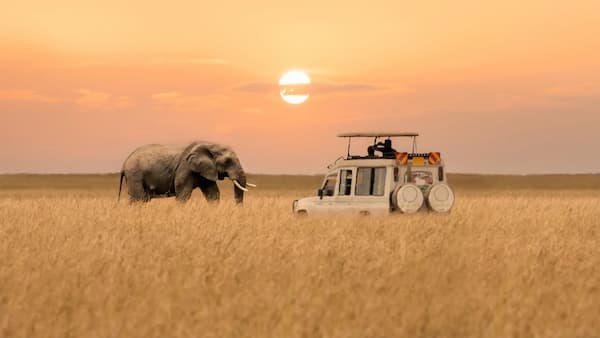
Maasai Mara National Reserve is an area of maintained savannah wilderness in southwestern Kenya, along the Tanzanian border. Its creatures include lions, cheetahs, elephants, zebras, and hippos. Wildebeest transits its plains during their annual migration. The landscape has grassy plains and rolling hills and is crossed by the Mara and Talek rivers. You will experience the Great Migration (July-October) and witness the Big Five.

Visit Amboseli National Park

Amboseli National Park is in southern Kenya. It’s known for its extensive elephant herds and views of spacious Mount Kilimanjaro, across the border in Tanzania. Observation Hill presents pictures of the peak and the park’s plains and swamps.

Varied wildlife includes giraffes, zebras, cheetahs, and hundreds of bird species. The western section is monopolized by the vast Lake Amboseli, which is dry outside the rainy season.

Explore Tsavo National Parks

Tsavo East National Park is a national park in Kenya with an area of 13,747 km2 (5,308 sq mi). It was established in April 1948 and covers a semi-arid area previously known as the Taru Desert. The Tsavo River flows west to east through the national park, which is found in the Taita-Taveta County of the former Coast Province.

Discover Lake Nakuru

Lake Nakuru is one of the Rift Valley lakes, found at an elevation of 1,754 m (5,755 ft) above sea level. It lies to the south of Nakuru, in the Rift Valley of Kenya, and is covered by Lake Nakuru National Park. The lake’s plenty of algae used to attract a vast abundance of flamingos that famously lined the shore.

See Rhinos at Ol Pejeta Conservancy

The Ol Pejeta Conservancy is a 360 km2 (140 sq mi) not-for-profit wildlife protection in Central Kenya’s Laikipia County. It is situated on the equator west of Nanyuki, between the foothills of the Aberdares and Mount Kenya. The Ol Pejeta Conservancy operates to conserve wildlife and provide a refuge for great apes.

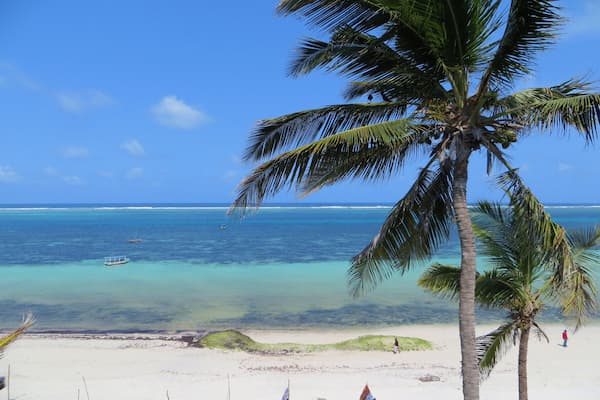
Relax at Diani Beach

Diani Beach is a beach on the Indian Ocean coast of Kenya. It is found 30 kilometers (19 mi) south of Mombasa, in Kwale County. You will enjoy Snorkeling, Kite surfing, and Wildlife spotting.

Rock climbing: Fischer’s Tower – Hell’s Gate National Park

You don’t need much if any, rock-climbing experience to scale Fischer’s Tower, the main attraction in Hell’s Gate National Park. Simply pitch up, pay a very modest fee, and the obliging climbing guide will fit you up with ropes, shoes, and the other tricks of the trade. And then he/she will teach you how to climb this 25m-high jagged volcanic plug.

All that remains of an ancient volcano, the rock is named after the German explorer, Gustav Fischer, who passed this way in 1883. According to local Maasai tradition, the rock is the petrified figure of a chief’s daughter who turned around against the dictates of tradition to take one last look at her home before leaving to be married.

Be warned, however, while making the climb, you are likely to come face to face with the elephant’s closest relative – the diminutive and very inquisitive rock hyrax, a colony of which have made the rock their home. Hell’s Gate National Park is 100km north of Nairobi and immediately adjacent to Lake Naivasha.

For more information visit: Hell’s Gate National Park

Horseracing: Ngong Racecourse

For a relaxed, colorful and typically ‘Nairobi’ day out, you can’t beat the classic ‘day at the races’. Ngong Racecourse and Golf Park have been rated as one of the most beautiful in the world, standing as it does in the lee of the famous Ngong Hills of ‘Out of Africa’ fame. It is also Africa’s most venerable. Horseracing first began in Kenya in 1904 when Somali ponies were raced around a track in the, then, the little town of Machakos.

Thoroughbred racing began in Nairobi in 1914, and apart from the interruption caused by two world wars, has continued ever since. Run by the Jockey Club of Kenya, the Ngong track is a classic ‘British Oval’ 2,400m in circumference with a 1,200m ‘straight’.

An average of 25 race meetings is held annually on alternate Sundays. Easily the most famous race is the Kenyan Derby, which is held in April. Interestingly the track has also been used for ostrich racing.

Zip-Lining: Kereita Forest

Kenya is home to some of the last remaining stands of primeval forests on earth, and to get a bird’s eye view of them you might like to try out some zip-lining. If so, head for The Forest, an extreme sports center less than an hour’s drive outside Nairobi where you can zip up your adrenalin on East Africa’s longest zip-line tour, which jumps across a series of forested hills with a combined length of 2,200 meters. The Forest also offers the madness of paintballing and the rather more calming sport of archery. For further information visit: Kereita Forest

Jump off a Cliff: Ngare Ndare Forest

Well yes, you can: literally. Amid the leafy green vaults of the magical Ngare Ndare Forest, you can (with supervision) jump off a cliff into a rock pool, swing across a rope bridge above wallowing elephants, go rock climbing, or throw yourself into a canyon. Or you can simply go for a walk amid 200-year-old African olive and red cedar trees. An ecological stronghold, the Ngare Ndare Forest stands at the foot of Mount Kenya.

Climb a Volcano Mountain: Mount Longonot

Things to do in Kenya – Mt Longonot National Park ‘The scene was of such an astounding character that I was completely fascinated and felt under an almost irresistible impulse madly to plunge into the fearful chasm’. So spoke the famous African explorer, Joseph Thomson as he made the first recorded ascent to the rim of Mount Longonot in 1884. The mightiest of the Rift Valley volcanoes, Longonot towers some 2,776 meters above the waters of bewitching Lake Naivasha.

As to climbing it – there is a well-defined track that leads, in around 45 minutes of steep scrambling, to the rim. Once on top, you can either absorb the view – which is a stunner, encompassing both the distant Aberdares Range and the Mau Escarpment – or you can strike off around the rim, the entire circuit of which takes around 3 hours.

Technically dormant, but better described as ‘senile’, Longonot is a relatively young volcano, having been formed within the last 400-600 years. And, while seemingly peaceful, only several thousand meters below its surface the groundwater seethes at an incredible 304°C (one of the hottest temperatures on earth).

Much of this energy has now been harnessed to the nearby Olkaria Geothermal Project in Hell’s Gate National Park, but the hot thermals rising above the mountain still have sufficient power to deflect the path of light aircraft flying overhead. Longonot stands within its own national park, 90km northwest of Nairobi.

For further information visit: Mount Longonot National Park

Paragliding: Kerio Valley

For the ultimate in paragliding experiences, you have to head for the Kerio Valley. A forgotten Eden with seemingly perpetual blue skies, the Kerio Valley is a seldom-visited and exquisitely beautiful gem.

A branch of its more famous cousin, the Great Rift Valley, the Kerio Valley drops a spectacular 1,219 meters between the Tuyen Hills and the Elgeyo Escarpment. 80km long and only 10km at its widest, on its upper slopes is a tangle of semi-tropical vegetation; in its sweltering bottom, there’s an only dry bush, elephant, buffalo, the meanderings of the crocodile-packed Kerio River and the beautiful oval of Lake Kamnarok.

A typical paraglide will last a couple of hours and cover ten kilometers – but during that time you can look down on Tiati, the sacred mountain of the Pokot people, the ancient Neolithic furrows of the enigmatic Sirikwa people, and the shimmering heat and dust of the Rimoi Game Reserve – which is probably Kenya’s wildest. And if paragliding is a little too edgy for you – the Kerio Valley also offers trekking, hiking and mountain biking.

The Kerio Valley is 500 km’s from Nairobi.

Other Things to Do in Kenya

Diving At The Coast

The best places for diving in Kenya will be found in the numerous marine reserves. From Malindi to Shimoni, scuba diving and snorkeling are the norms in the midst of some of the most beautiful coral reefs in the world. Watamu and Wasini island have some of the most spectacular snorkeling experiences.

Mountain Climbing And Trekking

Mount Kenya, the second-highest mountain in Africa is popular for trekking safaris, so are the Ngong hills close to the capital city of Nairobi. The scenic view is bound to be a moving experience for any visitor to the country.

Balloon Safari

A balloon safari over the vast savanna plains of Kenya Maasai Mara complete with a view of the animals in their natural habitat is an experience that will never leave you.

Fishing

There are exceptional opportunities for trout fishing, especially in the Mount Kenya and Aberdare regions in the central parts of the country. Nile Perch fishing takes place in Lake Victoria and the Lake Turkana regions.

River Rafting / White-water Rafting

The best times for rafting in Kenya are late October to mid-January, and from early April to late July. There are plenty of rapids, waterfalls and chutes on the Athi/Galana and Tana Rivers as well as on the Ewaso Nyiro river near Isiolo.

Cycling / Mountain Biking

Mountain biking and cycling trips at the Hell’s Gate National Park around the great Rift Valley region are great breathtaking experiences.

Bird Watching

Take a breathtaking view of a variety of birds at Rusinga Island, Lake Nakuru and Lake Bogoria.

Daphne Sheldrick

The Sheldrick Wildlife Trust is located at the Nairobi National Park and serves as an orphanage for baby elephants as well as some rhinos.

Giraffe Center

The Giraffe Center is an amazing place to visit. The center was built initially as a rehabilitation project to rescue the Rothschild Giraffe. It is home to a number of endangered species and a unique ecosystem.

Mamba Village

Nairobi Mamba Village is located in Nairobi’s leafy Karen suburb, about 13 kilometers away from the city center. Mamba Village is famous for its Crocodile Farm.

Paint Balling

Paintballing is a warlike game where guns are substituted with air pressure has driven paintballs, which burst on impact! Enjoy some paintballing action at Paintball Fury- Karen, Jungle Paintball Kenya – City Park or at Kitengela Paintball Polo.

Archery

Kenya Archery Association is the official national Archery association. Archery training grounds include: Twiga Centre- Parklands Sports Club, Strathmore Univesity Grounds, and East Africa Bow Sports Ltd

Horse Riding

You can catch some horse-riding and horse-racing action at the Ngong Race Course or the Thigiri Riding School.

Water-slides

Slide, spin, soar and plunge into the water. Enjoy water slide at Splash Waterworld Lanagata, Nairobi; or Wild Waters Nyali, Mombasa

Quad bike

You can drive down to Lukenya Motorcross on the outskirts of Nairobi for Quad biking, or head out further to the Hells Gate National Park in Naivasha about an hours drive from Nairobi.

Ice Skating

The Panari Hotel along Mombasa Road has an ice-skating rink for ice skating lovers or get to even learn how to play Ice Hockey.

Go Karting

Experience the rush of adrenaline as you take sharp corners in a kart at high speeds around the track at GP – Karting at Splash Langata or at Go Kart, Mombasa.

Things to do in Kenya with kids

  • Visit the Giraffe Centre (Nairobi) – Let kids feed and interact with endangered Rothschild giraffes.
  • David Sheldrick Elephant Orphanage (Nairobi) – Watch baby elephants being fed and playing in the mud.
  • Nairobi National Park – A game drive close to the city with lions, giraffes, rhinos, and more.
  • Lake Naivasha Boat Ride – Spot hippos and birds while enjoying a peaceful boat safari.
  • Hell’s Gate National Park – Family-friendly hiking and biking with breathtaking landscapes.
  • Animal Orphanage (Nairobi) – See rescued animals up close.

Things to do in Kenya other than safari

  • Relax at Diani Beach – Relish the beautiful white sand beaches of Diani, a popular coastal destination.
  • Hike Mount Kenya: Explore the spectacular landscape of Mount Kenya, a significant peak in Africa.
  • Explore Lamu Island – A UNESCO-listed Swahili town with rich history.
  • Snorkel or Dive at Watamu Marine Park – See colorful coral reefs and marine life.
  • Take a Sunset Dhow Cruise in Mombasa – A relaxing sail along the coast.
  • Visit Chale Island – A private island with gorgeous beaches and mangroves.

Things to do in Kenya on a budget

  • Walk Through Karura Forest (Nairobi) – Entry: ~Ksh 200 ($2).
  • Bike & Hike at Hell’s Gate National Park – Entry: ~Ksh 300 ($3).
  • Explore Oloolua Nature Trail (Karen, Nairobi) – Entry: ~Ksh 200 ($2).
  • Visit Paradise Lost (Kiambu) – Entry: ~Ksh 500 ($5)
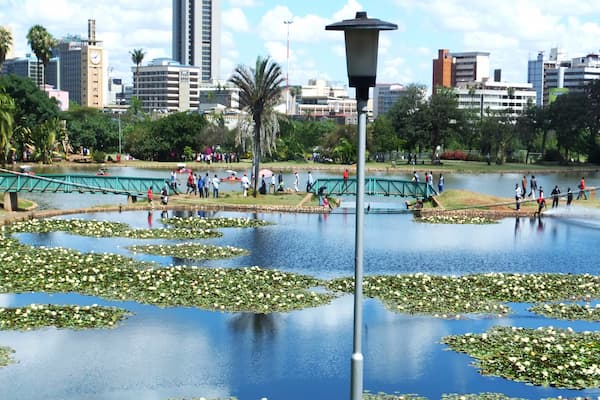
  • Go to Uhuru Park (Nairobi) – Free entry; boat rides and relaxation in the city center.
  • Swim at Fourteen Falls (Thika) – Entry: ~Ksh 200 ($2)
Filed Under: About Kenya, Tourist Attractions in Kenya Tagged With: Famous Things to Do in Kenya

Maasai Market Guide: What to Buy, Market Days & Shopping Tips

February 4, 2025 by Mercy Chumba

The Maasai Market

The Kenyan Maasai Market is the place to shop if you are looking for affordable, beautiful, and colorful souvenirs to take home with you. It is an open-air market with a wide variety of items to buy, including African paintings, bags, clothes, jewelry, shoes, and Shukas.

For the ultimate experience of culture and color, the Masai Market offers the opportunity to get authentic African art, handcrafted beaded jewelry, and clothing as souvenirs, gifts and even decorating art you could use for your home locally or even back in your country. At very affordable prices, you can purchase as many items as possible and all the same promoting local craftsmanship businesses.

What to Buy at Maasai Market

Ceramic and Soapstone Sculptures

  • Kisii soapstone is a soft, malleable material found in western Kenya. The artisans shape and polish it into beautiful sculptures, which are usually painted in bright colors or left in their natural state.
  • Note that soapstone is fragile, so make sure the items are well-packed before traveling.

Maasai Shukas | Maasai Market Kikois

  • Maasai Shukas can be found in various blends of colors from blue, green, orange, and yellow but most are usually red, these shukas are a fun way to remember the trip as they carry the Maasai culture, and they can also be used as bed covers, picnic blankets, or as an extra cloth(Kikoi) on a chilly day.

Artwork & Carvings

  • The Market is always filled with some amazing art and most of them have that African culture to them. At their Market, you can get some decent pieces for a low price, but if you want something more unique, you can check out some of Nairobi’s art galleries—like those found at the Railway Museum or Kenyatta Avenue for some more variety.
  • You’ll also find a decent range of wooden carvings, bowls, baskets, and dolls to add a little Kenyan culture to your home.

Leather Sandals and Footwear

  • Leather footwear, sandals, and belts are durable and practical souvenirs. Look for items that are crafted using traditional methods to ensure quality.

Beaded Jewelry

  • You will also find a wide selection of jewelry, from earrings to bracelets and Necklaces these are usually colorful and also come in many colors, here you can find some cool pieces at a relatively cheap price.
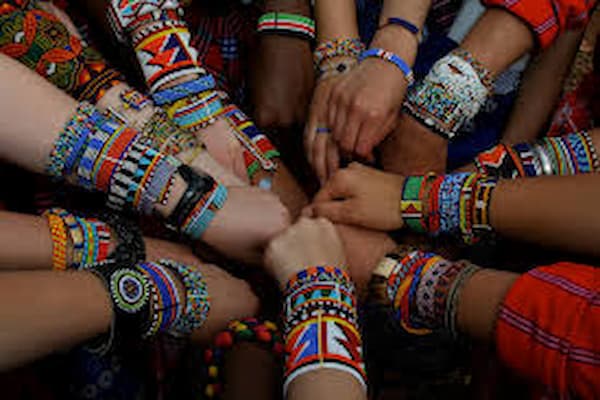
  • Opt for authentic Maasai beadwork made by local artisans to support the Maasai community directly.

Wooden Carvings

  • Kenya is best known for its exceptional woodwork, usually portraying the country’s rich wildlife, including giraffes, lions, rhinos, and elephants. Skilled artisans cave these items from jacaranda, ebony, or rosewood. Examples are Hand-carved animal figurines, masks, or sculptures.
  • Tip: Look for well-crafted, detailed pieces, and avoid overly polished or plastic-looking items, which may be less authentic.

Kitenge and Batik Fabrics

  • A visit to the Maasai market is a must. Batik scenes of everyday life, ethnic and animal motifs picked out on the fabrics with wax resist dyeing techniques. A sea of crafts is displayed on colored cloths and red blankets spread out over the ground; the atmosphere is one of wild excitement.
  • The Maasai sit around on fundamental benches under protective parasols, busily hand-making a variety of objects, resting, chatting amongst themselves, or endeavoring to attract the concentration of the tourists.

Handwoven Sisal Baskets

  • These baskets are usually crafted by Kenyan women, usually from rural communities, using traditional weaving techniques. Kiondos are eco-friendly, durable, and beautifully designed, with leather straps and detailed patterns.
  • Kiondo baskets can be used as decorative pieces, storage containers, and handbags, and buying directly from women’s cooperatives supports local artisans.
Maasai Market
Maasai Market

Bargaining & Language

Bargaining is a fun part of the Maasai Market shopping experience. If you are not a local, you will be quoted a substantially higher price and should be prepared to bargain hard, but respectfully. Speaking some Swahili will help place you as someone who knows what you are talking about and who does not want to be ripped off.

Greeting someone with Jambo will mark you as a tourist while using “sasa” or “sema” will make you appear more familiar with the Nairobi geography. This may sometimes not come off as the kindest greeting so you should stick to asking how their day is going: ‘Habari za Leo?’.  The following are some more phrases that may come in handy.

Phrases one can use at the Maasai Market

  • Si Leo—‘Not today’—Use this if you are not really interested in what someone has to offer.
  • Nitarudi—‘I will return’—This can be helpful if you are actually interested in something at someone’s stall, but either want to shop around more or are hoping that they will come down on the price. It is always advisable to do a lap before purchasing. There will be a lot of similar products available but quality and prices will often differ, so feel free to look around.
  • Ni Ghali—‘It’s expensive!’—Feel free to really over-exaggerate this one for maximum bargaining leverage.
  • Bei ya Mwisho?—‘Last price?’—Use this to ask for the sellers’ final price.

Knowing some basic numbers to bargain in Swahili can also be a huge help, but don’t worry if you don’t master them all. The traders will be happy to let you know their prices, frequently with calculators in hand for some added drama.

Maasai Market Days in Nairobi

Maasai Market is usually open on most days of the week, running from 8 Am to 6 Pm but it’s closed on Monday.

Tuesday

  • Westgate Shopping Mall in Westlands (the upper car park) relocated to Kijabe Street opposite the Norfolk Hotel

Wednesday

  • Capital Center on Mombasa Road near the airport

Thursday

  • Nakumatt Junction Shopping Mall on Ngong Road

Friday

  • Village Market in Gigiri (the upper car park)
  • Galleria Shopping Mall, the junction of Langata Road and Magadi Road

Saturday

  • The High Court parking lot in the city center (behind the Hilton)
  • Adams’ Arcade, Ngong Road

Sunday

  • Law Courts Parking, City Center
  • Safari Park Hotel, Thika Road
  • Yaya Centre in Hurlingham
  • Adams Arcade, Ngong Road

Maasai Market Hours

  • Tuesday – 8 am–6 pm
  • Wednesday – 8 am–6 pm
  • Thursday –  8 am–6 pm
  • Friday – 8 am–6 pm
  • Saturday – 8 am–6 pm
  • Sunday – 8 am–6 pm
  • Monday  – Closed

Tips for Shopping at a Nairobi Maasai Market

  • If you have a choice, avoid the High Court parking lot location on Saturday and adhere to the Yaya Centre or Village Market days.
  • Avoid “gifts” as you may thereafter discover that if you don’t buy anything else from that seller, that trinket is no longer a gift.
  • Also, if you want to avoid being overwhelmed with attention, wait until the market gets busy
  • Enjoy the haggling and hope to come away with some amazing deals. Keep in mind that it is their livelihood if they stick to “no” you likely have gone below a price where they can make any money from an item.

Maasai Market Village Market

  • This is a great place for shopping and for seeing the handicrafts of the whole country. I would recommend this shopping place for anyone looking to pick up some gifts from Kenya. They also have a little bit of everything that you would see in the shops all over the country. Beware of pick-pocketers (no personal experience).
  • There is also a co-op there with arts and crafts from all over Kenya. The mall also has a grocery store where you could get wonderful tea to drink on the safari and a store that is well-made and well-priced Kikyo (spelling) cloth, much better quality than anything you could have seen in other stores around the country.

Filed Under: Tourist Attractions in Kenya Tagged With: Famous Markets in Kenya

Mombasa Beaches Guide: Culture, Best Beaches, Activities & Resorts

February 4, 2025 by Mercy Chumba

Beaches in Kenya – Mombasa Beaches

Mombasa Beaches: The Kenyan Coast is a distinctive part of Kenya’s unrivaled tourism attractions and is home to over nine communities whose dialects gave the basis of the Kiswahili language, Kenya’s national language.

When it comes to beach life Kenya is hard to beat, offering 700 km of Indian Ocean coastline renowned for its white sandy beaches, clear waters, remote islands, and mysterious Swahili ruins. Protected for its entire length by a coral barrier reef lying just a kilometer offshore, Kenya’s beaches offer calm lagoons that are ideal for swimming and watersports, nine national marine parks promising sightings of whale sharks, dolphins, turtles, and thousands of other tropical species; and some of the finest dive sites on the planet.

About Mombasa Beaches

Mombasa is situated on the Eastern coastline of Kenya next to the Indian Ocean and it is famous among tourists for its spectacular beaches. It serves as the number one tourist destination in Kenya. Mombasa has various aquatic life, luxurious hotels as well as a very hospitable environment.

It also has a tropical climate throughout the year and it is suitable for travelers of all ages offering a wide exhibition of activities to enjoy on your Safari Holiday in Kenya.

History of Mombasa Beaches

Mombasa was founded between the 1st and 5th centuries by the ancient Swahili people and was later governed by them. In the centuries that followed, the Arabs, Portuguese as well as the British settled here as well. Today, when you visit this coastal town, the culture of the people you will see is a total reflection of its history.

Ancient architectural remains such as Old Town, Fort Jesus plus the historic Portuguese fort are famous tourist destinations influenced by Mombasa’s trade culture as well as Islamic and Portuguese culture. However, it is also a captivating, sophisticated, and commercial port town. This city is an island joined to the mainland by bridges and ferries.

It also has a great view of a wide harbor where trading ships mix with the local sailing dhows. Mombasa’s essence can be located in the modern old town alongside the small winding streets as well as the Arab architecture. Usually, the air around here is thick with the fragrance of spices.

Mombasa Beaches
Mombasa Beaches

The Culture Along the Kenyan Beaches

An exotic fusion of Arab, African, and Portuguese influences, the Swahili culture is found nowhere else on Earth. Typified by its serene pace of life, its sublime cuisine, its profound heritage, and its welcoming people, the sheer delight of the Swahili lifestyle prompts thousands of tourists to return year after year to immerse themselves in its lilting languor; and to step out of their everyday worlds and into the enchanted Swahili world of winding alleys, peeping faces, bustling markets, white-walled mosques and black-veiled women.

Roughly divided into ‘North’ and ‘South’ of the island city of Mombasa, Kenya’s beaches offer a surprising diversity. South of Mombasa are; the Shelly, Diani, and Msambweni beaches. North are Nyali, Kenyatta, Bamburi, Shanzu, Kilifi, Watamu, Malindi, and, ultimately, the beaches of the island resort of Lamu.

Beaches in Mombasa

  • Diani Beach, Mombasa
  • Tiwi Beach, Mombasa
  • Bamburi Beach, Mombasa
  • Nyali Beach, Mombasa
  • Shelly Beach, Mombasa
  • Jomo Kenyatta Public Beach, Mombasa
  • Shanzu Beach, Mombasa
  • Lamu Beach, Lamu
  • Mombasa Beach
  • Galu Kinondo Beach
  • Watamu Beach, Watamu
  • Copa Cabana Beach, Mtwapa

Diani Beach

  • Diani Beach is one of Mombasa’s most famous beaches for a spot of rest. It has won Africa’s top beach destination title for five years running since 2015. Stretching around 10 kilometers long, it is a famous spot in Africa for beach vacations with an excellent choice of luxury beach resorts.
  • Set in the lively town of Diani, the beach is famous for its beautiful coral reefs, black-and-white colobus monkeys, and its proximity to the Shimba Hills National Reserve, which overlooks the Indian Ocean.
  • It also offers different facilities like hotels, supermarkets, restaurants, and four shopping centers. Some of the activities done there are; windsurfing, sailing, snorkeling, kitesurfing, diving, water-skiing, and parasailing.

Watamu Beach – Turtle Bay

  • Turtle Bay is a long stretch of beach; about 7km long located on the Indian Ocean coast of Kenya, about 15km south of Malindi. The beach is best known for its local reefs, clear water, and soft white sands. The beach offers a great swimming opportunity, gives you a delightful feeling and the alluring ocean also gives you an amazing sight.
  • You can engage in some beach activities such as surfing, sunbathing, or taking a long walk along the shores. Turtle Bay is perfect for a calm and relaxing day by the sea.
  • In the Travellers’ Choice Awards (Best of 2015), TripAdvisor ranked Watamu Beach 14th position on the continent among the top 25 beaches in Africa.

Nyali Beach

  • Located on the white sandy beaches of Mombasa, the proud, legendary, and lavish, Nyali International Beach Hotel & Spa is an icon with a unique history and social value which has returned with its timeless grandeur and new and contemporary spirit.
  • Our accommodation facilities and restaurants are inspired by the original art and provide the guest with an experience that is truly indulgent and exquisite.

Lamu Beaches

  • Lamu Island is full of beautiful white sandy beaches, which are ideal for ultimate relaxation during vacation. Manda Bay and Shela Beach are the most famous beaches in Lamu. These beaches are best known for their picturesque views and peaceful atmosphere.
  • Also, these beaches are surrounded by luxury resorts built around the ocean. These beach resorts offer visitors an exquisite place to have fun and relax during their holidays.

Vipingo Beach

  • Vipingo Beach is located near Kilifi in a coastal area that consists of Swahili villages. Surrounded by green vegetation of coconut palms, the water is calm and crystal clear. The beach is panoramic but it is always isolated with very little crowd.
  • If you would love to spend some peaceful and romantic time with your lover or friends, Vipingo Beach is the best place to visit.

Tiwi Beach

  • Tiwi, a small settlement in Kwale County, has its fair share of a beautiful sandy beach in Kenya. The beach is located north of Diani Beach, which is about 17 km south of Mombasa.
  • The beach offers nature at its peak and it is also the best place you can go to experience the best beach vacation, specifically if you enjoy relaxing in the sun.

 Gazi Beach

  • Gazi Beach is located 3 km from Gazi, a coastal town in Kenya. The beach is never crowded and it is the best place to go if you are looking for privacy during your vacation.
  • The beach is surrounded by sumptuous palm vegetation and some luxury lodges that offer accommodation to visitors. If you are a sun worshipper, you will love Gazi Beach.

Bamburi Beach

  • This Beach is located on Mombasa’s North Coast. It is amazingly calm and it boasts fine soft sand and calm water, an excellent place to go and experience a fantastic vacation. The beach is a famous destination for sand seekers and sun lovers.
  • If you love walking, swimming, or relaxing by the beach, Bamburi offers everything. It is an ideal place to find some relaxing peacetime.

Kikambala Beach

  • Kikambala Beach is located North of Mombasa, on the Indian Ocean. The long stretch of white beach, filled with white sands and shielded by a long coral reef is one of the best beaches of the Kenya coast. There are several beach resorts situated on Kikambala Beach.
  • The beach also offers beautiful picture-perfect views and lots of space for locals and visitors to enjoy themselves.

Shanzu Beach

  • Shanzu Beach is located 30km from Mombasa, off the Mombasa-Malindi Highway. The beach is surrounded by coconut palm groves and has several beach resorts and hotels, bars, and restaurants, where visitors can lodge, enjoy, and have fun during their holidays.
  • The beach offers pleasant views of the sea, the sheer beauty of the coast, and endless water spots. It is a perfect place for a tropical beach vacation; it provides a variety of adventures that give visitors unforgettable experiences.

Copa Cabana Beach, Mtwapa

  • Copacabana Beach in Mtwapa, along Mtwapa Creek, is a laid-back spot with a vibrant nightlife, attracting locals on weekends and kids in the late afternoons for a various experience of evening entertainment, and daytime relaxation. The most famous restaurant is the Copa Cabana Beach Bar & Restaurant.
  • Some of the activities done there are swimming, playing football, water skiing, skydiving, and snorkeling.

Jomo Kenyatta Public Beach, Mombasa

  • Jomo Kenyatta Public Beach, locally known as Pirates Beach, is the only public beach in Mombasa. It borders Nyali Beach in the north and Bamburi Beach in the south. Many locals come to the sandy beach to swim, relax, and enjoy the stunning views of the Indian Ocean.
  • Some of the activities done there are sunbathing, swimming, water sports, and vibrant local markets.

Other Beaches in South Coast Mombasa

  • Kinondo
  • Chale Island
  • Funzi Island
  • Msambweni
  • Shimoni
  • Wasini Island

Mombasa Beaches Activities

Snorkeling and Scuba Diving

  • Snorkeling is an entertaining activity of swimming using a snorkel usually done in several marine National parks along the Kenyan coast such as Mombasa Marine National Park, Malindi Marine National Park, and Watamu Marine National Park. They provide a memorable safari experience and a destination suitable for a family safari.
  • This activity entails swimming with the help of a snorkel and fins deep into the ocean water. Snorkeling allows one to explore the marine life in its natural undisturbed habitat just like a wild game drive safari. Some of the animals likely to be seen during snorkeling include a wide variety of tropical fish such as butterflyfish angelfish, starfish, sea turtles, reef sharks, clownfish, and dolphins among others
  • Scuba diving is also an underwater swimming activity that involves the use of a self-contained underwater breathing appliance which is known as Scuba. What makes it so special is that the divers carry their source of breathing gas, which is usually compressed air giving them freedom to stay and move longer underwater than the surface-supplied divers and more time than free divers.

Beach Volleyball

  • Nyali Beach is another great spot for beach sports enthusiasts, with its gentle waves, and wide sandy expanse. The beach’s natural beauty adds to the excitement of playing beach volleyball and water polo.
  • Visitors can join local teams for friendly matches or simply enjoy a relaxed game under the sun.

Fishing

  • Deep sea fishing tours in Mombasa are offered as four-six, and eight-hour expeditions, and for the most hardcore anglers, multi-day trips.

Swimming

  • Mombasa’s beaches offer safe, warm waters perfect for swimming, specifically at beaches like Bamburi, Nyali, and Pirates. Some beaches have set up swimming areas with lifeguards for added safety.

Wildlife Watching

  • Head to the waters off Diani Beach for the chance to see dolphins. Some beaches, particularly near Diani, have turtle conservation projects. You may be able to see the nesting or hatching of sea turtles during the right season.

Mombasa Beaches – North Coast Beaches in Kenya

Bamburi Beach

  • Bamburi Beach offers a picturesque stretch of sandy beach with a good number of top-class hotels and resorts lined up facing the blue waters of the Indian Ocean.
  • The beach is located in close proximity to several town attractions.

Nyali Beach

  • Nyali Beach offers long miles of white sandy beach, backed by private villas, hotels, and gardens. They are suitable for those seeking a beach holiday with the convenience of Mombasa’s urban attractions close at hand.

Shanzu Beach

  • Shanzu Located about 20 kilometers from Mombasa city along the Indian Coast, is a town, a lovely spot, with superb beaches and many beautiful and interesting places to visit.
  • There is a holiday market in Shanzu with lots of small shops and a Bazaar offering a large collection of local crafts at very good prices.
  • Kilifi
  • Watamu
  • Malindi
  • Lamu Island

Mombasa Beach Resorts

Voyager Beach Resort

  • The rooms are well-kept and stocked. The resort also has mosquito repellent supplied daily in the rooms and it works perfectly. The air conditioning is also well done and quality.

Serena Beach Resort & Spa

  • It is located in Mombasa North Coast, Shanzu Beach. The resort is set on the pristine Shanzu Beach, this 5-star resort offers elegant rooms, a stunning swimming pool, and an extensive spa. It is famous for its Swahili-inspired architecture, lush gardens, and beachfront setting.
  • The resort also offers cultural experiences, a children’s club, fine dining, and water sports like snorkeling and windsurfing.

Diani Reef Beach Resort & Spa

  • The Resort & Spa offers 143 aesthetically decorated rooms and suites equipped with modern amenities to make your stay a memorable affair.

Bamburi Beach Hotel

  • Their stunning beachfront property offers secluded views of the Indian Ocean and is the perfect place to relax and unwind.

Park Inn by Radisson, Mombasa

  • It is located in Nyali Beach, North Coast. The resort has a more modern resort offering contemporary rooms and facilities.
  • Park Inn by Radisson is great for both leisure and business travelers. The resort features an outdoor pool, restaurant, and also gym.
  • Sarova Whitesands Beach Resort & Spa
  • Swahili Beach Resort
  • Neptune Paradise Beach Resort & Spa
  • Ocean Village Club
  • The Reef Hotel

Filed Under: Tourist Attractions in Kenya Tagged With: Famous Beaches in Kenya

Places to Visit in Nairobi Guide: Top Attractions, Hidden Gems &Travel Tips

February 4, 2025 by Mercy Chumba

Places to Visit in Nairobi Kenya

Places to Visit in Nairobi Kenya: Whether you are visiting Nairobi for business or pleasure many activities and experiences would suit any traveler. Nairobi city is filled with fun and interesting activities for anyone to enjoy, from the breathtaking scenery and beautiful abundance of natural attractions to the glamour and glitz of the modern city lifestyle.

Nairobi: Safari capital of the world

As well as being the ‘Safari capital of the world’, Nairobi also happens to be one of Africa’s most dynamic cities. So it’s well worth a couple of days discovering Kenya’s ‘City in the Sun’ before or after your safari.

Places to Visit in Nairobi

Nairobi National Park

  • Location: Langata
  • Distance: 10km from the CBD
  • Duration of visit: Half day depending on interest points.

Established in 1948 and covering an area of 117sq, km, it is the only park near the city center. It has diverse environments with characteristics of flora and fauna and deep rocky valleys. The animals that can be found in this park are black and white rhinoceroses, diverse birdlife, Lions, Leopards, hyena, Cheetah, Buffalo, Zebra, and hippos.

Nairobi Animal Orphanage

  • Location: Langata
  • Distance:10Km from CBD
  • Duration of visit: 2-3 hrs depending on interest points

It was established in 1964 as a refuge and rehabilitation center for wild animals found abandoned or injured in Kenya. In a setting for visitors to walk around and have close-up views of a variety of animals such as Lions, crocodiles, cheetahs, leopards, wild cats, and wild dogs. But watch out for the group of monkeys and baboons roaming freely around.

Nairobi Safari Walk

  • Location: Langata
  • Distance: 10Km from CBD
  • Duration: Half a day depending on points of interest

This is Kenya’s new conservation-based recreation facility. The combination of skilled and creative landscape design, unique wildlife species, and detailed interpretation, renders the facility supreme in tourism and conservation education.

It offers an opportunity to experience what you expect to see across the country. Introductory talks on Kenya’s parks and reserves can be arranged for you by the naturalists. You will have a taste of Kenya’s rich Animal collection including the rare bongo, white rhino, albino zebra, and a collection of cats, antelopes, and primates.

Nairobi National Museum

  • Location: Museum Hill
  • Distance: 3Km from CBD
  • Duration: 1hr depending on points of interest

The Museum aims to interpret Kenya’s rich heritage and offers a one-stop shop for visitors to sample the country’s rich heritage both for education and leisure. Visitors are treated to a variety of shopping and dining facilities, as well as botanical gardens that offer a serene environment.

There is a wide variety of attractions on display at the museum ranging from cultural and natural exhibits, stuffed birds and mammals, fossils from Lake Turkana, exhibits of local arts, an impressive collection of rocks and minerals, and a collection of pre-historic bones and fossils including one of an elephant. One can purchase a combination ticket for the adjacent snake park with live specimens of Kenya’s most common reptiles.

Nairobi Mamba Village

  • Location: Karen
  • Distance: 13Km from CBD
  • Duration: Half a day depending on points of interest

Mamba Village is famous for its Crocodile Farm. The pens are home to an estimated 70 Nile crocodiles. Four Maasai Ostriches can also be found strutting around their pen with grace.

Visitors often come into direct personal contact with them when given the opportunity to feed these gallant birds. The experience is always satisfying and exciting, especially for children. Within the Village, there is also a tented camp available for accommodation.

Giraffe Centre

  • Location: Karen
  • Distance: 15Km from CBD
  • Duration: Half a day depending on points of interest

The center has been ostensibly established as a breeding ground for the endangered Rothschild Giraffe. Information about the Giraffe is provided and an elevated feeding platform was installed to give visitors the opportunity to hand feed the giraffes.

Daphne Sheldrake Elephant Orphanage

  • Location: Karen
  • Distance: 10Km from CBD
  • Duration: 1 – 2 hours depending on points of interest

Elephant calves orphaned by poachers or natural occurrences are brought here from all over the country. They also receive extremely specialized treatment and personalized care from highly dedicated staff.

The orphanage is open to the public during the calves’ feeding times where they can interact with calves and watch them being fed while they are informed about how the calves came to be at the orphanage. There is also an option for visitors to choose to adopt an elephant where they will be in charge of the elephant’s care at the orphanage.

Karura Forest

  • If you’d like to find yourself in the midst of an ancient forest, home to 605 species of wildlife and 200 species of birds; a place of plunging waterfalls and mysterious caves where Kenya’s freedom fighters once sheltered – then head for the Karura Forest Reserve on the outskirts of Nairobi.
  • A place where monkeys swing and butterflies flit, this is the ideal place for family walks, cycling, and picnics. For More Information visit: Karura Forest

Nairobi Arboretum

  • Location: Kileleshwa
  • Distance: 3Km from CBD
  • Duration: Half a day depending on points of difference

The arboretum occupies 30 hectares and holds over 350 different species of trees. It is home to over 100 migrant and resident birds. The Arboretum is one of Nairobi’s few remaining green spaces, with jogging trails, walking paths, and picnic lawns.

Bomas of Kenya

  • Location: Langata
  • Distance: 10Km from CBD
  • Duration: 3 – 4 hours depending on points of interest

It was established by the government in 1971 as a subsidiary company of Kenya Tourist Development Corporation as a tourist attraction. Bomas of Kenya is a living museum celebrating the colorful tribes of Kenya. Visitors here can learn about the lifestyle, art, music, crafts, and their culture.

The complex encompasses recreated traditional homesteads or Bomas built in the traditional style, each one reflecting the culture of a major ethnic group. Every afternoon, a team performs traditional dances and songs in the large theater.

Kitengela Glass

  • Location: Kitengela
  • Distance: 7Km from CBD
  • Duration: 3 – 4 hours depending on points of interest

This is a glass-blowing factory. The workers create handmade glass bottles from renewed and recycled raw materials, such as scrap windows, glass bottles, and other glassy materials.
The finished products are stylish products, made through functional art and inspired design.

Kazuri Beads

  • Location: Karen
  • Distance: 10Km from CBD
  • Duration: 1 – 2 hours depending on points of interest

Kazuri creates hand-shaped and painted ceramic jewelry which is made in Kenya by over 300 local women and sold all over the world.

Karen Blixen Museum

  • Location: Karen
  • Distance: 10Km from CBD
  • Duration: 1 – 2 hours depending on points of interest

This is the home of farmer Danish author Karen Blixen made famous by her book and the movie based on the book “Out of Africa” which chronicles her life at the estate.

Kenya National Archives

  • Location: Along Moi Avenue in the city center
  • Duration: 1 – 2 hours depending on points of interest.

It houses the Murumbi Gallery, dedicated to the late Joseph Murumbi, Kenya’s second vice-president from May 1965 – August 31, 1966. He and his wife Sheila were avid collectors of African art.

Murumbi’s collection has been described as “Africa’s best-known collection of priceless heritage and artifacts”. He left behind 50,000 books and sheaves of official correspondence. The national archives department has set up a library containing some of the 8,000 “rare books” (those published before 1900) entrusted to them upon the death of Murumbi.

Maasai Market

  • Location: varies throughout the week
  • Duration: Within the CBD
  • Duration: 1 – 2 hours depending on points of interest.

Here visitors can buy and view different art designs by Kenyans. The designs are mainly to do with Kenya. The market also moves around the city visiting different malls and locations selling their products.

  • Monday – No market
  • Tuesday – Off Kijabe Street near
  • Text book center
  • Wednesday – Capital Center, Mombasa Road
  • Thursday – The Junction Mall, Ngong Road, 3rd Floor parking
  • Friday – Village Market, Upper car park
  • Saturday – Low court parking CBD, Adams Arcade, Ngong Road
  • Sunday – Yaya shopping Centre, Car park Adams Arcade, Ngong Road Safari Park Hotel, Thika Road

Godown Arts Centre

Warehouses in Kenya are known as ‘go downs’ because back in the colonial days the instruction would be, ‘go down to the warehouse and …’. Today if you want to take the temperature of Nairobi’s pulsing arts scene you have to go down to the GoDown Arts Centre.

A converted warehouse in the city’s Industrial Area, this is a multi-functional art gallery and cultural space for the visual and performing arts.
For more information visit: GoDown Arts Centre

Upepo Gallery

Rising from the shores of the Indian Ocean to the glacial towers of Mount Kenya, Kenya is the epitome of photogenic. And photographers flock to capture her magic. Some of the finest images, however, are framed by those who live in Kenya.

To see them, head to the fascinating Upepo Gallery (Upepo means ‘the wind’ in Swahili), which opened in May 2017 and showcases the works of some of the finest photographers working in Kenya today. Famous ‘names’ include Anup Shah, Carl de Souza, Tony Karumba, Georgina Goodwin, Natalia Mroz, Fredrik Lerneryd, Neil Thomas, Siegfried Modola, and Michael Soi. You can also pick up some stunning limited-edition prints.

Kenyatta Market: For the love of meat

Kenyans love their meat (Nyama in Swahili). And best of all, they like it choma (literally ‘burned’, but actually barbequed). A classic Kenyan eating experience, nyama choma is best sampled at a nyama choma stand – and they come in all shapes and sizes.

Recommended by those who know, however, are the stands in the Kenyatta Market. For more information visit: Kenyatta Market.

City Market

Once the hangar of a hot air balloon, City Market is smack bang in the center of town and best reached by taxi. Colorful, chaotic, and not for the timid (every stall holder vies to sell their wares and bargaining is a must) it is the ideal place to buy wooden carvings, soapstone statues, printed T-shirts, Maasai beadwork, and more.

Open Mon-Fri 9 am-5 pm. Closes at noon on Saturday. For more information visit: City Market.

Filed Under: Tourist Attractions in Kenya Tagged With: Famous Places to Visit in Kenya

Nairobi Safari Walk Guide: Best Attractions, Directions, Hours, Fees &Travel Tips

February 4, 2025 by Mercy Chumba

A Guide To Nairobi Safari Walk

Nairobi Safari Walk: Remember Sebastian the acrobatic chimp and the enormous Bengal tigers the only ones in Africa, back in the animal orphanage? Now imagine a fresh variety, in their natural environment viewed from a rooftop level. Quite Breathtaking! That is the Nairobi Safari walk at the moment. A walk transformed, and modernized traversing 27 exotic acres into Nairobi National Park from its establishment in 1997.

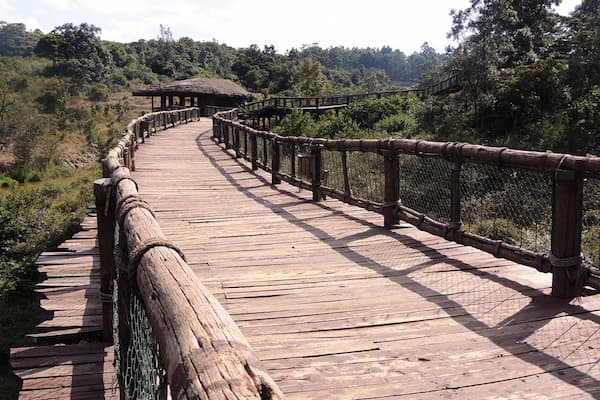
With its raised wooden boardwalk that allows for uninterrupted views of the animals, the Safari Walk is a showcase for Kenya’s Parks and Reserves, allowing visitors to discover what they can expect to see across the country. Visitors can see a sample of the country’s rich animal life including the rare bongo, white rhino, and albino zebra as well as big cats, antelopes, and primates. It is also home to some 150 species of local trees.

Nairobi Safari Walk
Nairobi Safari Walk

What to see at Nairobi Safari Walk

Wildlife Viewing

  • Visitors can discover the flora and fauna they expect to see across the country at the Nairobi Safari Walk. They can sample the menu of the country’s rich fauna and flora including Crocodiles, Pigmy hippos, antelopes, white rhinos, Big cats, and primates. It is also home to some 150 indigenous trees.

Birdwatching

  • From the boardwalk, gaze into Nairobi National Park where birding is done with a good resident ornithologist (bird guide) who knows where to find the birds and will explain them to you in detail. Examples of birds include the globally threatened Corncrake, Madagascar Pond-Heron, Lesser Kestrel, Corncrake, Jackson’s Widowbird, and many more.

Raised Boardwalk

  • The raised boardwalk offers close-up views of the animals in their simulated habitats. Visitors can see a sample of the country’s rich animal life including the white rhino, the rare bongo, and the albino zebra as well as big cats, antelopes, and primates.

Crocodiles and Hippos

  • There are three main habitats; the savannahs, wetlands, and woodlands inside the safari walk. At the entrance to the safari walk, you will find a terraced wetland adorned with water lilies and papyrus and home to grazing pigmy hippos and crocodiles.

Indigenous Flora

  • The Walk also showcases a wide variety of indigenous trees and plants, helping visitors comprehend the ecological importance of Kenya’s native flora.
  • Some key species include: Acacia xanthophloea (Fever Tree): Found along watercourses, providing essential shade and habitat for both animals and birds.

What To Take With You

  • Drinking water, picnic items. Also useful are: binoculars, a camera, a hat, sunscreen, sunglasses, and a guidebook
  • Home to over 100 mammal species, four of the Big Five (lion, Buffalo, leopard and rhino)
  • Has a spectacular wildebeest and zebra migration
  • Diverse birdlife: Has over 400 bird species. At least 20 of them are seasonal European migrants.

Attractions in Nairobi Safari Walk

  • Large predators – lion, leopard, hyena, and cheetah.
  • Aggregations of large herbivores- eland, buffalo, zebra and wildebeest
  • Ivory Burning Site Monument
  • Walking trails at hippo pools
  • Nairobi Safari Walk & the Orphanage.
  • Spacious accommodating picnic sites

Nairobi Safari Walk Specials

Throughout the Nairobi Safari Walk, don’t miss your chance to come face-to-face with some of our amazing wildlife. Viewing blinds have been built to take you up close and fully protected. Don’t make loud noises or scare the animals.
Get closer to:

  • Lion (Large carnivore cat; severely threatened and yet so amazing!) – You wouldn’t want to get close to this one!
  • Rhino (a severely endangered pre-historic species) – Enter a Real translocation crate and emerge to view their holding pen
  • Cheetah (Critically Endangered, fastest animal on earth) – Maybe your last chance to see one this close!
  • Leopard (Skillful predator and critically threatened) – From this viewing blind, you’re often eye-to-eye.
  • Crocodiles — they may look drowsy, but they are not! The safe distance is good for both of you.

Special spots at the Nairobi Safari Walk

  • Children’s Museum: Touch a cheetah cub, watch ants build, and discover more about wildlife. Psst! It’s not for children only, adults are also allowed.
  • Weather Station: Where does our rain come from? Find out right here! Inter-act! Puzzles and games for you right at the entrance
  • The Cheetah Stretch: Eight meters of power in one leap, Yep. That’s a cheetah leap.
  • Human Vs. Wildlife: Are Humans and Wildlife That Different? Flip the paddles and find out!
  • Spoor Trails: Learn how to differentiate Animal tracks making you an expert in tracking. However, you have to identify exactly which hoof belongs to which animal to be an expert tracker.
  • Classroom: Set within the facility is a great meeting hall. Contact the NSW management to arrange for a very special briefing or event.
  • Plant Nursery: Developed to promote plant conservation and ecologically friendly farming techniques, the nursery demonstrates non-consumptive methods of utilizing forest resources and propagation of indigenous plants. They are available for distribution to schools and other conservation areas.
  • Time Capsule: In 2000, the Time Capsule was erected by the International Fund for Animal Welfare (IFAW). Buried beneath the stone is a glass capsule containing messages from many people in Kenya about what they hope to improve for animals in 50 years. One day. ..
  • Family Friendly Hotshots: Families can have a great time and not worry about newborns and toddlers. There is a clean changing room as well as bathroom facilities for all religions.

Even the blind can see. 

  • There are also speakers explaining what goes around as well and the museum helps them touch and vividly imagine what each animal looks like.
  • Wheelchair access is available for the physically handicapped.

Nairobi National Park Safari Walk House Rules

Please observe these rules while visiting this special facility for your safety:

  • Do not throw anything at the animals or birds. If you do, they’ll hide or run away from you.
  • Do not shout, yell, or tease the animals
  • Stay on the path. They’re to keep you and the animals safe from each other
  • Do not feed the animals; they require a special diet. Animals also become aggressive if they get used to being fed by people.
  • Do not litter or drop rubbish on the ground. Use the rubbish bins provided
  • Do not smoke. This is a smoke-free environment
  • Do not drink Alcoholic beverages or use drugs. This is prohibited. Intoxicated visitors will be asked to leave

How to get to Nairobi Safari Walk (Directions)

By Road

Follow Uhuru Highway in the direction of Jomo Kenyatta International Airport. Turn right at Nyayo National Stadium and proceed along Langata Road (past Wilson Airport) until you see signs for the Nairobi Safari Walk main entrance on your left.
Opening Hours:
Daily 9 a.m to 5.30 p.m. including public holidays.

The best time to visit the Nairobi Safari Walk

Though the Nairobi Safari Walk is accessible year-round, the optimal visiting times are the dry months from June to September and January to February. These periods present walkable paths and wildlife more visible.

Nairobi Safari Walk Charges and Entrance Fees

Citizen

  • Adults KSH: 250
  • Child KSH: 150

Resident

  • Adults KSH: 350
  • Child KSH: 200

Non – Resident

  • Adults USD:25
  • Child USD: 15

Nairobi Safari Walk Contacts

  • Email: marketing@kws.go.ke
  • The Warden:
  • Tel: (Nairobi) +254(20)6002345, 6004594 – Fax: +254(20)6002345

Filed Under: Tourist Attractions in Kenya Tagged With: Famous Conservation Areas in Kenya

Uhuru Gardens Guide: Monument, Best Activities, Directions & Entry Fee

February 4, 2025 by Mercy Chumba

A Guide To Uhuru Gardens Nairobi

Uhuru Gardens is Kenya’s largest Memorial Park. Uhuru is a Swahili word meaning freedom. It is important to note that it is Kenya’s birthplace, being the site where the first Kenyan flag was first raised in December 1963 to mark independence. This expansive area is now favored for picnics.

About Uhuru Gardens

Uhuru Gardens National Monument and Museum is a commemorative park and museum in Nairobi, Kenya. It contains three points of significance:

  • The Mũgumo tree (Ficus sycomorus), purportedly planted in the exact location where the Union Jack, or more likely the former Flag of the Colony of Kenya, was removed and the Flag of Kenya was placed. Also, the tree is of significance to the Kikuyu people.
  • The independence commemorative monument, built in 1973, is a twenty-four-meter-high column, supporting a pair of held hands and a dove of peace. This point celebrates the Declaration of Independence at midnight, 12 December 1963. Also, it celebrates the inauguration of Kenya’s first president, Jomo Kenyatta, on the same night. On one side of this monument is a statue of soldiers raising the Kenyan flag.
  • A fountain celebrating “Twenty-Five years of Uhuru – peace, love, and unity monument”.

History of Uhuru Gardens

The Uhuru Garden Memorial Park symbolizes Kenya’s independence from British rule in 1963. Also, the park celebrates the inauguration of the First President of Kenya, Jomo Kenyatta. Its historical landmark is a point of celebration and a recreational ground that hosts several religious ceremonies.

Uhuru Gardens
Uhuru Gardens

Uhuru Gardens Declared a National Monument

Officially, the gardens were declared a National Monument in 1966 because of their historical importance. This is where the first Kenyan flag was first raised thus celebrating the very first year of independence on the 12th December 1963.

Uhuru Gardens – Mugumo Tree

The Mugumo tree is symbolic as it was planted on the spot where the Union Jack (British flag) was brought down and Kenya’s national flag was first hoisted. The site was a diversity of native flora and fauna of savannah woodland.

What To See In Uhuru Gardens

  • A 24-meter-high monument commemorating Kenya’s struggle for independence is the centerpiece of attractions at the Gardens. To one side of this monument is a statue of freedom fighters raising the Kenyan flag. About a hundred meters away is another monument with a fountain.
  • The expansive grounds are a favorite with picnic lovers who often drive up to secluded spots under some of the scattered trees in the area.

How to get to Uhuru Gardens (Directions)

Uhuru Gardens is situated in the Langata area of Nairobi, along Langata Rd, bordering Carnivore Restaurant to the south, and Wilson Airport to the east.
Matatu numbers 15, 24, and 126 will get you to Uhuru Gardens. Open Daily at 8:00 am – 6:00 pm.

Uhuru Gardens Activities

Picnicking

  • The Gardens is a great spot for a family picnic or a day out with friends. The park also offers ample grassy areas, ideal for spreading a picnic blanket, relaxing, and enjoying the outdoors.

Historic Importance

  • The gardens were declared a National Monument in 1966 due to their historic importance. it celebrates Kenya’s freedom from British colonial rule and provides a unique chance to learn about and relish the struggles and triumphs of the Kenyan people during their fight for freedom.
  • A Mugumo (fig) tree and two statues honoring Kenya’s freedom are found inside the grounds.

Beautiful Landscape

  • The park around Uhuru Gardens National Monument & Museum offers a serene and picturesque setting. With its manicured lawns, lush greenery, and well-maintained gardens, it also provides a peaceful escape from the hustle and bustle of Nairobi city.

Cultural Insight

  • The Gardens showcase a diverse range of artifacts and shows that provide insights into Kenya’s rich cultural heritage.
  • Visitors can learn about the country’s traditions, customs, ethnic groups, and historic events. It deepens their knowledge of Kenya’s vibrant culture.

Educational Experience

  • It also offers an educational experience for both tourists and locals. It also gives a chance to delve into Kenya’s history, exploring the struggles and accomplishments that shaped the nation. The museum’s exhibits and displays provide practical knowledge about Kenya’s past.

Recreational Activities

  • Uhuru Gardens National Monument & Museum makes it an ideal spot for recreational activities. Visitors can engage in outdoor games with family and friends, enjoy picnics, or take walks.
  • It also provides a refreshing and tranquil setting for relaxation. Not sure about the weather for Nairobi?

Restaurants Near Uhuru Gardens Memorial Park

Aero Club of East Africa

  • Nairobi (2.9 km from Uhuru Gardens Memorial Park)
  • The hotel is located in Nairobi, 3.3 miles from Kenyatta International Conference Centre. It has accommodations with a fitness center, private parking, a garden, and a shared lounge.

Yaya Hotel & Apartments

  • Nairobi (3.6 km from Uhuru Gardens Memorial Park). The hotel offers an outdoor pool and a tennis court. Yaya Hotel & Apartments is located in Nairobi. Guests acquire free WiFi access and the use of BBQ facilities and a children’s playground.

Palacina The Residence & The Suites

  • Nairobi (4.6 km from Uhuru Gardens Memorial Park)
  • It offers accommodations with free WiFi in Nairobi, Palacina The Residence & The Suites has an on-site restaurant and a fitness center.

Deerpark Luxury Stays

  • Hotel in Kilimani,
  • It is located in Nairobi, 4.3 miles from Kenyatta International Conference Centre, Deerpark. Deerpark also provides accommodations with free bikes, free private parking, an outdoor swimming pool, and a garden

JW Marriott Hotel Nairobi

  • Hotel in Westlands
  • It is located in Nairobi, a 12-minute walk from Nairobi National Museum, JW Marriott Hotel Nairobi has accommodations with an outdoor swimming pool, a fitness center, free private parking, and a terrace.
  • Velvet Bar and Grill
  • Secret Garden
  • Pampa at Savannah

Uhuru Gardens Memorial Park Entry Fee

Entry to the Uhuru Gardens is free but the car parking fee is ksh 200 and the camera fee is 5000 shillings which is too much in line with Kenyan tradition. Photography is also restricted in this Garden without paying the amount.

Uhuru Gardens Contacts

  • Attraction Type: Historic Sites
  • Category: Historical Museum, Monument
  • Region: Nairobi
  • City / Town: Nairobi
  • Road / Street: Lanagat Road
  • Telephone: +254 20 800 0811, +254 722 926126
  • Email: uhurugardens@museums.or.ke
  • Entrance Fee: Yes

Filed Under: Tourist Attractions in Kenya Tagged With: Famous Attractions and Monuments in Kenya

  • Page 1
  • Page 2
  • Page 3
  • Go to Next Page »

Primary Sidebar

Recent Posts

Mount Elgon National Park

Luhya Tribe

Luhya Tribe Guide: History, Sub-Tribes, Language, and Traditions

Kikuyu Tribe

Kikuyu Tribe Guide: History, Clans, Myths, Language and Culture

Akamba People

Akamba Tribe Guide: History, Clans, Culture, Music & Witchcraft

Meru Tribe

Meru Tribe Guide: Population, Names, Taboos & Clans

Uhuru Gardens

Uhuru Gardens Guide: Monument, Best Activities, Directions & Entry Fee

Places to Visit in Nairobi

Places to Visit in Nairobi Guide: Top Attractions, Hidden Gems &Travel Tips

Mombasa Beaches

Mombasa Beaches Guide: Culture, Best Beaches, Activities & Resorts


Home | About Us | Contact Us| Privacy Policy

Copyright © 2026 · Powerd by . InformationCradle · Log in