
A Guide To Lake Baringo
The water mass is 60km north of Nakuru town and is surrounded by a scenic rugged semi-desert landscape. Lake Baringo is saline and on the floor of the rift valley. The lake is another birdwatchers paradise, with more than 450 birds’ species and home to crocodiles and hippos. Activities at the lake include fishing, skiing, surfing and boat rides.
Lake Baringo is part of the East African Rift system. The Tugen Hills, an uplifted fault block of volcanic and metamorphic rocks, lies west of the lake. The Laikipia Escarpment lies to the east.
Lake Baringo Game Viewing and Activities
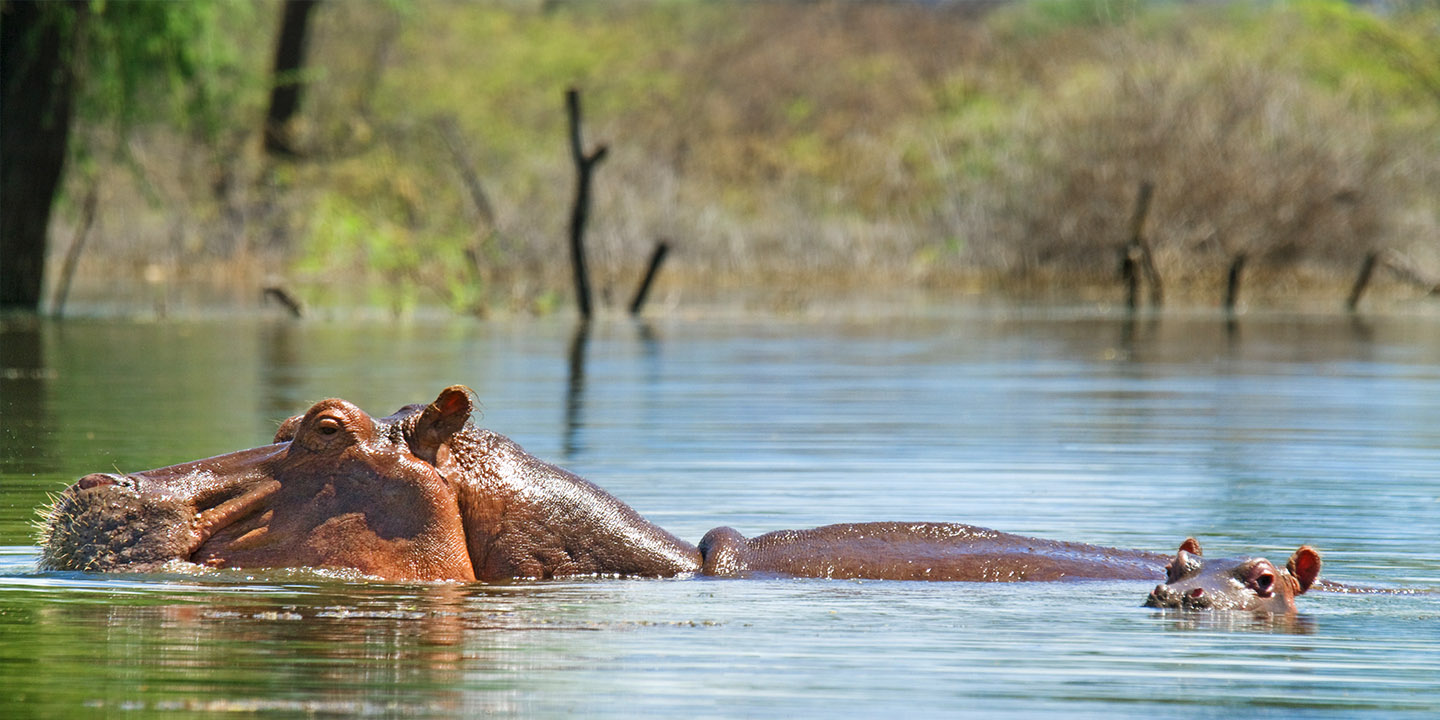
Water flows into Lake Baringo from the Mau Hills and Tugen Hills. It is a critical habitat and refuge for more than 500 species of birds and fauna. The lake also provides an invaluable habitat for seven fresh water fish species, with the Nile Tilapia being endemic to the lake.
Pale and dark phase Gabar goshawk, Paradise flycatcher, African fish eagles, Marabou storks, Shikra and White-faced scops owl are amongst the regular sightings, while some the less common birds that can be seen there include Hemprich’s hornbill, the African darter and occasionally the African skimmer. There is also a variety of kingfisher species, as well as, Grey-headed bush shrike and Violet wood hoopoe.
Lake Baringo provides a home to a number of land and water dwelling species, such as hippo, crocodile, zebra, klipspringer, Grant’s gazelle, Chandler’s mountain reedbuck, and the rare Greater kudu.
Lake Baringo Seasons and Climate
The climate at tlake Baringo stays at 25 to 35 degrees Celsius all year round, and while a welcome breeze blows off the Lake in the evenings, there is never a risk of feeling cold.
Due to its positioning on the equator, Kenya does not have a specific summer and winter, but seasons are divided into dry and wet seasons.
During the dry season (June to October) the sky is clear and the sun is shining, although these are the coldest months of the year. Early mornings can drop to around 12 degrees, it is advised to pack warm clothing as morning game drives in open vehicles are cold.
During the wet season (November to May) daytime temperatures range between 24 and 30 degrees Celsius, depending on altitude. A period of ‘short rains’ occur between November and December, while the main rainy season, called the ‘long rains’ arrive after a short dry spell, in March April and May.
Top Destinations
Baringo Island Camp
Contact Details
0724874661; 0728478638
admin@islandcamp.co.ke
www.islandcamp.co.ke
Now affiliated with Karen Blixen Coffee
Garden Cottages Ltd.
Karen (Nairobi) Kenya
0722848043;
info@blixencoffeegarden.co.ke
www.karenblixencoffeegarden.com
About Island Camp Resort
The Island Camp Resort which was founded from an archaeological dig site of the famous Leakey family. It is the second oldest tented camp in Kenya with Governor’s Camp being the oldest and is situated on the southern end of Ol Kokwe Island. This famous island is in the middle of Lake Baringo, which is one of the major lakes in the Great Rift Valley of Kenya. The camp was further developed by Jonathan Leakey, Alan Douglas-Dufresne and Willie Roberts in 1972. In 1994, the Lonrho Hotel group assisted the Island Group Ranch in obtaining the land title to the property and they further developed the hotel. When this group gave up its hotel business in Kenya in 1996, Mr. Perrie Hennessy took over ownership and management the camp. In 2012 he was joined by Mr. Michael Beamish and Dr. Bonnie Dunbar and this group completely renovated the camp in 2013, including construction of new large lake view thatched cottages with verandahs with private pools. Because of its long history, the camp has been the location for holidays for many local Kenyans as well as an escape for many international tourists.
The lake itself is located in Northern Kenya and is an oasis in the arid plains. It is located at the narrowest part of the Great Rift Valley and is surrounded by the Tugen Hills volcanic range (El Gaylo) on the west and the Lakipia Escarpment. The lake was around 50 square miles in area until the early 2000’s until the dramatic increase in water since 2011; so much so, it is now estimated to be over 100 sq. miles. The lake is well stocked with fish and attracts many Cormorants and Fish Eagles as well as other water birds. The Lake is also well populated with Crocodiles and Hippos.
The lake is fed by several rivers, the two major ones being El Molo and Ol Arabel although it has no obvious outlet. Despite this, it is one of only two freshwater lakes in the Great Rift Valley in Kenya. Strictly speaking, it is in fact slightly saline, but not enough to bother the crocs, hippos nor indeed the people who swim in it.
Baringo is an ideal stopover on a safari to Northern Kenya. Main road access to Baringo is directly from Nakuru by bus or private transport. The nearest town to the lake is Kampi ya Samaki.
Soi Safari Lodge
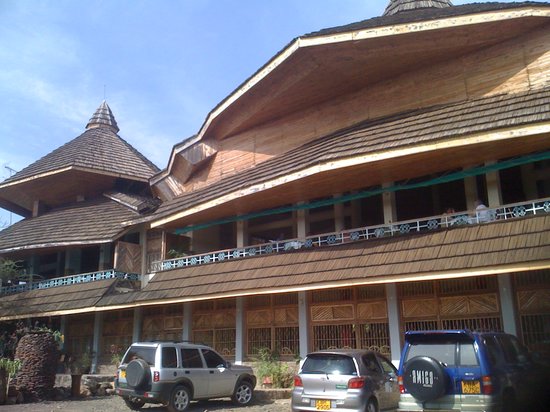
Soi Safari Lodge is located on the Western shores of Lake Baringo in the Rift Valley in Kenya, where it has spectacular views of Lake Baringo, located in a bushy acacia with the compound patched with rocks to show the lodge’s originality.
Lake Baringo which is approximately 168sq Kilometers, is a major tourist attraction in the Great Rift Valley.
To the east of the Lake is the Laikipia escarpments and to the west rises the dramatic Tugen Hills. The Lodge is built with the latest technology and design with an addition of local touch, the lodge is cool and makes it an ideal safari gateway place. The compound is very spacious with trees lining up the front of the lodge adding up to its beauty.
At the back of the lodge is an Olympic size swimming pool, surrounded a bushy acacia and at the lakeshore a rocky, dry and sparsely populated environment. The guests definitely enjoy the spectacular view of Lake Baringo.
Guests are welcomed with cool fruit juices in the comfy, rugged lounge at the reception area. The rooms are spacious and air-conditioned for the best stay. The Lodge has 74 standard rooms, 4 accessible rooms (for disabled persons), 2 interconnecting rooms and 6 deluxe en-suites. All rooms have hot showers and balconies with spectacular views. The four course gourmet meals are blended with African cuisine for that rare but delicious taste. The lodge has very beautiful art work on the walls with an authentic African look.
Soi Safari Lodge has a great view of Laikipia Escarpment across The Lake. Also,there are several majestic islands that rise above the water including the famous Devil’s Island.
The lodge can also be accessed by air, either via an airstrip that is within 2km of the lodge or a helipad at the lodge.
Robert’s Camp
The orange-brown waters of lake Baringo(Approximately four hours drive from Nairobi) and dramatic rocky surroundings provide us with one of Kenya’s most stunning areas.
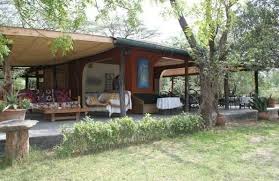
Roberts’ Camp is a beautiful lakeside campsite, that offers bandas, a cottage, large and small safari tents, dome tents and campsite grounds with clean toilet and shower facilities.
The Thirsty Goat Bar and Restaurant is open, and campers are always welcome, although. Please note; there is limited space. Please contact Robert’s Camp prior to planning a visit to confirm availability.
Lake Baringo is home to an unparalleled variety of birds, and some unusual wild creatures. While you may not encounter all of Baringo’s 450 bird species, you’re likely to spot Verreaux’s Eagle Owls, Hammerkops, Storks, Hornbills, and Fish Eagles around the lake, while in the camp itself, you can spend many enjoyable hours identifying the colourful array of Weavers, Starlings, and Sunbirds. The camp has a number of well trained guides and bookings can be made through the reception for the wide variety of activities on offer.
At night you can experience the thrill of seeing or hearing hippos, sometimes with young hippos, grazing on the lawns and returning to the water by day. Meanwhile on the lake shore, the logs seen floating on the lake are often slumbering crocodiles!
The camp is safe for visitors, but guests are reminded that animals, especially hippos, should never be approached too closely, and special care must be taken during the dark hours.
The campsite is manned 24/7 by staff and it has 2-3 night watchmen for extra security.
Feel free to take advantage of the free WiFi in the bar and restaurant.
Many of the guests are those going through Africa with a tent on their back and only their fancy to guide them. And no visitors can forget the ice cold beers (which go down well after a dry, dusty day on the road) from the camp’s restaurant, The Thirsty Goat.
Lake Baringo Njemps
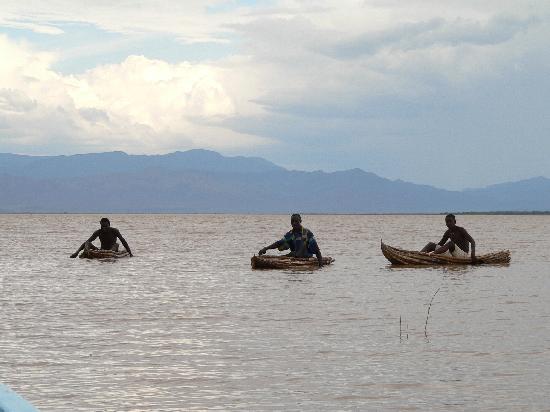
At Lake Baringo heart is Ol Kokwe Island, a stark rocky island that is home to Njemps villages and a well appointed camp. This is an excellent base for exploring the lake, with boat trips ideal for bird and hippo spotting.
Lake Baringo is the traditional home of the Njemps tribe, a unique people who are the only pastoral, cattle herding, tribe who also fish. Among other pastoral tribes such as the Maasai, eating fish is a taboo.
What to see in Lake Baringo
Water flows into the Lake Baringo from the Mau Hills and Tugen Hills. It is a critical habitat and refuge for more than 500 species of birds and fauna, some of the migratory waterbird species being significant regionally and globally. The lake also provides an invaluable habitat for seven fresh water fish species. One, Oreochromis niloticus baringoensis (a Nile tilapia subspecies), is endemic to the lake. Lake fishing is important to local social and economic development. Additionally the area is a habitat for many species of animals including the hippopotamus (Hippopotamus amphibius), Nile crocodile (Crocodylus niloticus) and many other mammals, amphibians, reptiles and the invertebrate communities.
While stocks of Nile tilapia in Lake Baringo are now low, the decline of this species has been mirrored by the success of another, the marbled lungfish (Protopterus aethiopicus) which was introduced to the lake in 1974 and which now provides the majority of fish output from the lake. Water levels have been reduced by droughts and over-irrigation. The lake is commonly turbid with sediment, partly due to intense soil erosion in the catchment, especially on the Loboi Plain south of the lake.
Lake Baringo Islands
The lake has several small islands, the largest being Ol Kokwe Island. Ol Kokwe, an extinct volcanic centre related to Korosi volcano north of the lake, has several hot springs and fumaroles, some of which have precipitated sulfur deposits. A group of hot springs discharge along the shoreline at Soro near the northeastern corner of the island.
Several important archaeological and palaeontological sites, some of which have yielded fossil hominoids and hominins, are present in the Miocene to Pleistocene sedimentary sequences of the Tugen Hills.
How to get to Lake Baringo
Main road access to Lake Baringo is directly from Nakuru by bus or private transport. The nearest town to the lake is Kampi ya Samaki. Some of the hotel and lodges here can arrange transfers to Nakuru/Nairobi.
The lodges and hotels here both organize local excursions. Boats can also be hired.
Baringo is an ideal stopover on a safari to Northern Kenya.
Lake Baringo Map
More About Kenya
Kenya is a world unto itself. Kenya is Africa’s original safari destination, attracting explorers, adventurers, and travelers for centuries. A safari to Kenya is a trip of a lifetime.
Tourist Attractions in Kenya:
Kenya has one of the world’s greatest tourist attractions sites, known for its diversity of landscape, wildlife, and cultures. From sweeping savannahs to tropical beaches and coral reef, dense equatorial forests to mighty snow-capped mountains, and more.
For more information visit: Tourists Attractions in Kenya
Kenya Safari
Kenya is the ultimate safari destination, providing travelers with a window into the heart of Africa. But this is not all that Kenya has to offer. Located near the equator, Kenya´s magic lies in the fact that the country encompasses an astounding variety of landscapes and climates, flora and fauna, as well as communities and cultures, home to water sports, a swim with dolphins and adventure.
For more information visit: Kenya Safari
Hotels and Accommodation in Kenya
Hotels in Kenya vary enormously in price and facilities. Luxury hotels in Kenya offer excellent standards of service and are comparable to the best hotels anywhere in the world. Kenya’s abundance of natural produce, combined with the rich variety of cultures and traditions, has created a great culinary nation.
The fertile volcanic soil of the Rift Valley produces a bounty of fresh vegetables, while the coast is a great source of tropical fruit and fresh seafood. The Kenyan coast is also the home of the world-renowned Swahili cuisine, a blend of Middle Eastern and African cooking with a particular coastal twist.
For more information visit: Hotels in Kenya
Towns in Kenya
Apart from the towns of Nairobi , Mombasa, Kisumu and Nakuru, Kenya has other major towns each a unique representation of the country’s striking abundance in flora and fauna. Most of these towns are headquarters in their respective counties or major economic bases in their regions. Luxury hotels and lodges located here provide good accommodation and conferencing facilities for guests who dare to try out a taste different from the capital or the coast.
For more information visit: Towns in Kenya
The Kenyan People Culture and Tradition
Kenya’s culture blends together diverse tribes, traditions, and religions into one beautiful, well-woven tapestry. These traditions complement each other while incorporating the modern influences of globalization – resulting in a vibrant cultural spirit that is uniquely Kenyan. Kenya has over 42 different tribes with different languages and several dialects. Kenyan tourism has made the Maasai and Samburu tribes the most famous because of their long preserved culture.
For more information visit: Kenya People and Tribes
Lake Baringo
County: Baringo | Nearest Town: