• Skip to primary navigation
  • Skip to main content
  • Skip to primary sidebar
Kenya Information Guide

FamousKenya

Kenya Information Guide

  • Home
  • About Kenya
    • Tribes
  • Famous People
  • Travel
    • Tourist Attractions in Kenya
    • Towns
    • Hotels
  • Contact Us

About Kenya

Kisii Tribe Guide: Origins, Culture, Traditions, Taboos &Way of Life

December 29, 2009 by Robert Njora

Kisii Tribe

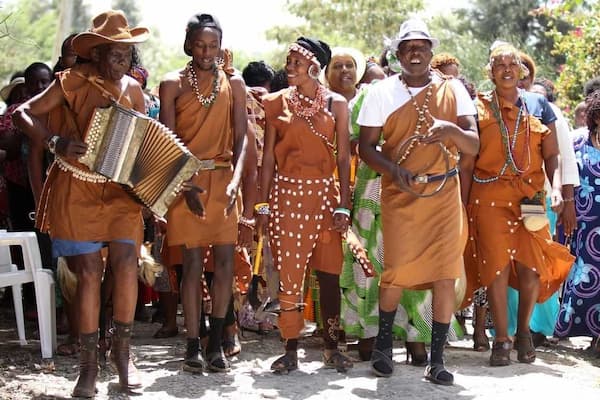
The Kisii tribe (also understood as Abagusii (Mkisii/Wakisii) in Swahili, or Gusii in Ekegusii) are a Bantu ethnic group indigenous to Kisii and Nyamira counties of one-time Nyanza, as well as parts of Kericho and Bomet counties of the former Rift Valley province of Kenya.

The Abagusii traditionally occupy Kisii and Nyamira counties, as well as sections of Kericho and Bomet counties, all of which were within the one-time Nyanza and Rift Valley provinces of Kenya.
Kisii Tribe
Kisii Tribe

Kisii Tribe – Origin and History

Founded on linguistic and anthropological proof, the Abagusii emanated from the neolithic agropastoralist occupants of present-day Kenya, especially from the one-time Nyanza and Rift Valley provinces. The competing view by some scholars that the Abagusii relocated from Uganda is lacking, as there’s no historical proof the Abagusii settled in Uganda and have been known to only settle on the eastern slopes of the Kenyan side of Mt. Elgon.

The oral tradition of the Abagusii holds that their ancestors relocated from a place called Misiri, north of Mt. Elgon, perhaps in present-day Egypt. These ancestors were the inventors of the six major Gusii clans: the Abagetutu, Abanyaribari, Abagirango, Abanchari, Abamachoge, and Ababasi. This initial group subsequently absorbed a group of settlers from west of Lake Victoria, what is nowadays present-day Buganda and Busoga; these settlers may have been incorporated from the Luhya and Olusuba-speaking Suba people.

Kisii People and Sports

Gusii is a fond reference to their homeland and Mogusii is culturally identified as their founder and patriarch. Kisii town – known as Bosongo or Getembe by the locals – is located in Nyanza Province to the southwest of Kenya and is home to the Gusii people. The name Bosongo is believed to have originated from Abasongo meaning the Whites or the place where white people settled who lived in the town during colonial times.

Football (soccer) of national league status is played at Gusii Stadium and other surrounding grounds. Shabana Football Club is based in Kisii town; it has been a popular soccer club in Gusii land and has featured in the Kenya national premier league for many years. Formed by V. Dogo Khan, the proprietor of Shabana Hardware Stores as an incentive to his store employees in the mid-1980s, it grew to be a strong football team which in its successful run, attracted and recruited star players from local high schools and talented individual players living or working in the municipality.

However, its team performance has lately been relegated down to the national 2nd Division league after losing most of its star players to other local and international teams for economic reasons.

Kisii Men

Among the Abagusii, circumcising boys without anesthesia about 10 is an essential ceremony of passage. Traditionally, the Abagusii did not wed into tribes that did not practice circumcision, though this practice has fallen in current generations. The ceremony typically takes place every year in November and December, tracked by a period of isolation where boys are led in different activities by older boys.

During this period, only older circumcised boys are permitted to visit the initiates. It is regarded taboo for anyone else to visit during this time. During this period of isolation, the male initiates are prepared for their roles as young men in the community, and the code of conduct of a circumcised man. Initiated boys were furthermore taught the rules of shame (“chinsoni”) and respect (“ogosika”). This is a time of celebration for families and the community at large. Family, friends, and neighbors are invited days in advance by the candidates to join the family in celebration.

Kisii men have certain traits and abilities that should naturally endear them to all women predisposed to marriage. And good enough, these traits are so ingrained in their DNA, that only a few Kisii men tend to veer off the set communal tangent. And this is why, For starters, the most cherished possession of a Kisii man is a house. In Kisii, more than anywhere else in the world, a man’s worth is measured by the house he has built. And the family he raises in it.

Kisii Language and Names

The Kisii language (also known as Gusii or Ekegusii) is a Bantu language spoken in the Kisii district in western Kenya, whose headquarters is Kisii town, (between the Kavirondo Gulf of Lake Victoria and the border with Tanzania). It is spoken by the Gusii people. A few Gusii people are bilingual in Luo.

Ekegusii is endangered, and there are/Swahili-tribe reasons for this. Increasing globalization means that business is now generally conducted in Swahili or English. Ekegusii is also used less frequently at home, at church, and at school. Individuals who still use Ekegusii tend to be the elderly

Kisii Culture – Kisii Names

Here are some typical Kisii names which are not borrowed: These names are predominantly Kisii.
Name             Pronunciation             Meaning
Kwamboka    KWAHM-boh-kah     Born while crossing a river
Makori           mah-KOH-ree            Born on the way
Mongina        MOHN-ngee-nah      My mother
Moraa             MOH-rah                   Fun loving

Kisii Culture – Lifestyle of The Kisii People

The Kisii family typically consists of a man, his wives, and their married sons, all living together in a single compound. Large families serve two purposes: with high infant mortality rates the survival of the family is assured, and the large numbers facilitate defense of the family enclosure. Initiation ceremonies are performed for both boys and girls, and rituals accompany all important events.

Death is considered not to be natural but the work of ‘witchcraft’. Traditionally, the Kisii were mostly farmers, growing crops such as finger millet, sorghum, beans, sweet potatoes, and bananas. The Kisii also made soapstone carvings, basketry and pottery. They traded with their neighboring communities for tools, weapons, crafts, livestock, and agricultural products.

Kisii Tribe – Kisii Food

This community of mostly farmers. They have a variety of traditional foods. Kisii usually escorts their meals with sour milk( Marurano) and vegetables. Kisii is well known for producing bananas and for that case, bananas turn out to be the most eaten in Kisii. The best bananas in Kenya are from the Kisii area. Kisii’s traditional Ugali( Obokima) is made from millet flour or Sorghum flour.

Kisii People – Faith and Religion

Before Christianity was introduced to the Gusii, they believed in one supreme god who created the world but did not interfere directly in human affairs. Instead, interference was caused by ancestor spirits (ebirecha), witches, and impersonal forces. The Gusii believed that displeased ancestor spirits were responsible for disease, the death of people and livestock, and the destruction of crops.

Today, most Kisii people claim to be followers of some form of Christianity. A Roman Catholic mission was first established in 1911 and a Seventh Day Adventist mission in 1913. There are four major denominations in Gusiiland: Roman Catholic, Seventh-day Adventist, Swedish Lutheran, and the Pentecostal Assemblies of God.

Kisii Witchcraft

Although churches are very active, some non-Christian beliefs continue to influence the lives of most Kisii people. If afflicted by misfortune, many Gusii visit a diviner (abaragori) who may point to displeased spirits of the dead and prescribe sacrifice. In addition to abaragori, who are usually women, various healers also exist. Abanyamoriogi (herbalists) use a variety of plant mixtures for medicines.

Indigenous surgeons (ababari) set fractures and treat backaches and headaches through trepanation (needles). Professional sorcerers (abanyamosira) protect against witchcraft and retaliate against witches. Omoriori, the witch smeller, finds witchcraft articles hidden in a house. Witches (omorogi) can be men or women but are usually women. They are believed to dig up recently buried corpses to eat the inner organs and use body parts for magic. Among the Gusii culture, witchcraft is believed to be a learned art handed down from parent to child.

Kisii People  – Economic Activities

About 51% Kenyans are living below the poverty line in Kisii County. Therefore, the poverty level of Kisii county population is: 51%. The major economic activities or industries in the county are: Subsistence agriculture, vegetable farming, small-scale trade, dairy farming, tea and coffee growing, commercial businesses, and soapstone carvings.
Other economic statistics and information available for Kenya’s Kisii County are listed below:

  • Age Dependency Ratio: 100:94
  • Resources: Soapstone, Arable land
  • Financial Services: More than 8 commercial banks, over 6 micro-finance institutions
  • Agricultural products: Tea, coffee, bananas, tomatoes, vegetables, dairy products, maize, sugarcane.
  • CRA Allocation: 3,581,287,040

Kisii Tribe – Social Problems

Alcoholism and violence toward women are the most severe social problems. Traditionally, only older people were allowed to drink large amounts of locally brewed beer (amarua). Today, social control over drinking has broken down, and traditional beer and home-distilled spirits are served in huts all over the district. Probably close to 50 percent of young and middle-aged Kisii men are regular drinkers, with a larger proportion of men than women.

This heavy drinking leads to violence, neglect of children, and poverty. The Gusii also have high murder rates compared to the rest of Kenya. Although violence toward women (such as rape and beatings) has been part of Gusii culture since earlier in this century, alcohol is probably a factor in its increase.

Kisii Women-Kisii Ladies

The exploitation of women in Gusii society is a serious human rights problem. According to customary law, which is usually followed in the countryside, women cannot inherit or own land, cattle, or other resources. This makes Kisii women completely dependent on men for survival and attainment of any future security.

Until a Kisii woman has adult sons, she is under the authority of her husband and has to ask permission from him to leave the homestead. In addition, the Kisii tribe practice female genital mutilation, which is practiced regularly even though it is prohibited by law. Sometimes called female circumcision, this surgery robs girls of the possibility of sexual satisfaction. The practice is intended to keep girls and women “in line,” and it has attracted the attention of human rights advocates around the world.

Kisii Tribe Population

The Kisii tribe is calculated to have a population of 2,703,325 people as of September 2024, and they are known for their rich cultural heritage, special traditions, and a strong sense of community.

Taboos in Kisii community

  • Mothers setting feet and dining in their married daughters’ houses
  • Circumcised boys entering the bedroom of their parents
  • Father going into their son’s house
  • Men visiting their mothers-in-law far too often
  • Girls wearing trousers, short, and revealing clothing
  • Women climbing trees and thatching on rooftops
  • Women eating chicken gizzard meant for family heads
  • Disrespecting elders, last wishes of the dead, and ancestors
  • A pregnant woman setting eyes on the dead
  • A freshly circumcised young man facing their mother

Kisii Myths

Kisii myths include the belief in a supreme god, the evil eye, and the legend of Misri.

Kisii Culture Marriage

Kisii marriage traditions include paying the bride’s wealth, selecting a bride, and celebrating the marriage. Traditional marriage was established through the payment of bride wealth in the form of livestock and money. Bride wealth was paid by the husband to the wife’s family. This act established a socially approved marriage. Traditionally, divorces were rare and required the return of the bride wealth.
Filed Under: Tribes Tagged With: Famous Ethnic Groups in Kenya

Kikuyu Tribe Guide: History, Clans, Myths, Language and Culture

December 29, 2009 by Robert Njora

Kikuyu Tribe

The Kikuyu (also Agĩkũyũ/Gĩkũyũ) are a Bantu ethnic group native to East Africa Central Kenya. At a population of 8,148,668 as of 2019, they account for 17.13% of the whole population of Kenya, making them Kenya’s largest ethnic group. The term Kikuyu is the Swahili borrowing of the autonym Gĩkũyũ.

Kikuyu Tribe
Kikuyu Tribe

Since the possession of land is one of the foundations of the Kikuyu tribe social, religious and economic life, this conflict rapidly spiraled into war, and it was the Kikuyu`s formation of a political association against the British that sparked the infamous Mau Mau uprising of the 1950s, which eventually led to Kenya winning its independence.

As a result of their early involvement in the fight for freedom, the Kikuyu people have always played a dominant role in Kenyan politics and commerce, their most famous politician being Kenya’s first president, Jomo Kenyatta, who even today is referred to affectionately as “Mzee” (respected elder).

Perhaps more successfully than any other Kenyan tribe, the Kikuyu people have adapted to the challenges posed by Western culture and technology, and their role in modern day Kenyan business is significant. However, the rural Kikuyu people, traditionally agriculturalists, continue to combine small-scale farming with the growing of cash crops such as tea, coffee, and pyrethrum.

Kikuyu Tribe – History

The Kikuyu tribe number more than three million and their heartland is the area around Mt Kenya.

Origin of the Kikuyu Tribe

The Kikuyu belongs to the Northeastern Bantu branch. Their language is considerably closely connected to that of the Embu and Mbeere. Geographically, they are focused in the environs of Mount Kenya. The precise place that the Northeast Bantu speakers relocated from after the initial Bantu expansion is uncertain. Some references indicate that the Kikuyu arrived in their present Mount Kenya area of habitation from earlier settlements further to the north and east, while others argue that the Kikuyu, along with their closely related Eastern Bantu neighbors the Embu, Meru, Mbeere, and Kamba moved into Kenya from points further north.

From archaeological evidence, their appearance at the northern side of Mt. Kenya dates to around the 3rd century, as part of the larger group known as Thagicu. By the 6th century, there was a community of Agikuyu newly installed at Gatung’ang’a in Nyeri. The Agikuyu established themselves in their current homeland of Mt. Kenya region by the 13th century.

Kikuyu Culture – Administration

From archaeological proof, their arrival at the northern side of Mt. Kenya dates to about the 3rd century, as part of the larger group known as Thagicu. By the 6th century, there was a community of Agikuyu newly installed at Gatung’ang’a in Nyeri. The Agikuyu confirmed themselves in their current homeland of Mt. Kenya region by the 13th century

The administration of the clans (mwaki), made up of many family groups (nyumba), was initially taken care of by a council of elders with a good deal of importance being placed on the role of the witch doctor, medicine man and the blacksmith. Traditionally the Kikuyu god (Ngai) is supposed to reside on Mt Kenya (Kirinyaga – the ‘mountain of brightness’, ‘mountain of whiteness’ or ‘black and white peak spotted like ostrich feathers’) which accounts for the practice of orientating Kikuyu homes with the door facing Mt Kenya.

Kikuyu Circumcision Ceremony

Initiation rites for both boys and girls are important ceremonies and consist of circumcision in boys and cliterodectomy in girls (the latter now rarely practised), accompanied by elaborate preparations and rituals. Each group of youths of the same age belong to an ‘age-set’ (riika) and pass through the various stages of life (with associated rituals) together.
Subgroups of the Kikuyu include Embu, Ndia and Mbeere.

Kikuyu Tribe - KIkuyu People
Kikuyu Tribe – KIkuyu People

Kikuyu People – Kikuyu Creation Myth

In the fiery dawn of time, when the earth trembled in the throes of creation, a dense cloud of mist stood over the land as Mugai (Ngai), the divider of the universe, descended to earth. There, upon the snow-capped peaks of the mountain called Kirinyaga, he made a dwelling place as his seat of mystery.

Kikuyu Tribe – Gikuyu and Mumbi

Mugai beckoned Gikuyu, father of the Gikuyu, to the sacred mountain and said: “You shall carve your inheritance from this land, it shall belong to you and your children’s children.” And Gikuyu went to a grove of sacred fig trees where, resting in the shade, he found the most beautiful of women. He took her for his wife and named her Mumbi, the creator of the tribe.

Kikuyu Women – Gikuyu and Mumbi’s Nine Daughters

Gikuyu and Mumbi built a home and had nine daughters. Their nine daughters matured into beautiful women. Their cheerful laughter was like the sweet chorus of birds and their milky teeth glittered like white doves in flight. When they walked, the melody of the beads around their waists rose to the sky, deep, somber, and enchanting.

But with every full moon, they felt the flow of the rising tide searing like glowing firewood in their wombs. They beseeched their parents: “For many seasons you have held and comforted us but now we wish to have homes of our own so that your names may be whispered from generation to generation.” For many moons, Gikuyu and Mumbi searched their hearts. At last, in despair, Gikuyu fell upon his knees.

Kikuyu Culture and Beliefs

Raising his face to Kirinyaga he called upon his creator to bless his daughters with husbands. Mugai heard him and commanded Gikuyu to make a sacrifice in the fig tree grove. Heeding the commandment Gikuyu sacrificed a lamb and a kid lit a fire with nine burning sticks and said: “We have come to beseech you for rain, which sustains our children.

Say now that the rain may fall.” And out of the fire came nine flaming young men whose backs were firm like the trunk of the sacred Mugumo tree and when he saw them Gikuyu gave thanks and welcomed them into the homestead.

Kikuyu Women – The House of Mumbi

The nine handsome young men could not resist the beauty of Mumbi’s daughters and asked for their hands in marriage. Gikuyu blessed the marriages and as each daughter built her own hut and had a family, the name of Mumbi prospered. When Gikuyu and Mumbi passed away, each daughter called together all her descendants, forming one clan under her own name.

These nine clans merged in unity, kinship, and solidarity and were given the ancestral name of “The House of Mumbi.” And to this day, when the Kikuyu call upon their creator, they turn their faces to the snow-clad mountain.

Kikuyu Culture – Gikuyu Dowry Process

The Agĩkũyũ (the Kikuyu) is the most populated community in Kenya. They live mainly around the snow-capped Mt. Kĩrĩnyaga (Mt. Kenya) in what was known as the Central Province, as one of the 42 tribes. The myth of the origin of the Agĩkũyũ leads them to believe to be the descendants of Gĩkũyũ (father) and Mũmbi (mother) whose origin was in Mũkũrwe wa Nyagathanga (mũkũrwe being the Mũkũyũ fig tree and nyagathanga being an unknown species of birds).

This is a place in Mũrang’a within Central Kenya where cultural center has been set up at the supposed original home of Gĩkũyũ and Mũmbi in Mũrang’a County.

The Nine Clans of the Kikuyu People (Mĩhĩrĩga ya Agĩkũyũ)

The Kikuyu people believe in one deity known as Ngai – or Mũgai (The Divider) – who they believe lived in the highest peak of Mt. Kĩrĩnyaga (today’s Mt. Kenya). The original parents were blessed with nine full (10) daughters who were married to 9 men later given to Gikũyũ and Mũmbi when Gikũyũ prayed to Ngai by sacrificing a lamb under the sacred Mũgumo/Mũkũyũ tree to give them men to marry their daughters.

The names of the daughters were Wanjirũ, Wambũi (aka Wangarĩ aka Waithekahumo), Wanjikũ, Wangũi (aka Waithiegeni), Wangeci (aka Waithĩra), Wanjeeri (aka Waceera), Nyambura (aka Wakĩũrũ), Wairimũ (aka Gathiigia) and Wamũyũ (aka Warigia). Myth goes on to state that it is from the daughters that- the “nine” (ten being 9 plus 1) clans of the Agĩkũyũ originated.

Kikuyu Traditional Marriage

The Kikuyu people are traditionally farmers and good livestock keepers. Their products from the farm and the animals they bred were key in trade. Dowry payment was therefore counted in the form of goats, sheep, and cattle. The dowry process was however not a way to purchase a bride financially although the term used at times is Kũgũrana. The process is designed to enable families that come together to investigate each other’s background and engage in banter that results in positive social interaction.

The Kikuyu dowry – Rũracio – is at the center of a more elaborate process and a symbol of honor to the parents of the bride-to-be. It must be understood that all requirements for the dowry process are well documented and should not be used to denote the value of the bride-to-be in financial terms nor be used as a means of exploitation of the groom-to-be. There have been mistaken attempts to associate the rũracio with how much education the girl has received, her profession or with her social class.

Any extra amounts given to the girl’s family in lieu of the standard dowry should be at the discretion of the groom according to his financial capacity and preferences.
Kikuyu Culture – Kikuyu Language Traditions

Kikuyu Customary Marriage Procedures 

In modern times, Kikuyu dowry payment still precedes a wedding amongst the Kikuyu people. The dowry payment is in a series of events, namely:

  • Kũmenya muciĩ (getting to know the bride’s home in two low-key visits)
  • Kũhanda ithĩgĩ (planting a branch of a tree – to open the way for actual dowry negotiations and during which the Kũonorwo mĩtĩ takes place) – may take place on the same day as Kũracia.
  • Kũracia or Rũracio (actual dowry payment that lasts a lifetime and is not paid in full)
  • Kũonio itara (the lady getting to see where firewood was stored in the traditional kitchen; which is a visit to the Groom’s homestead)
  • Kũguraria / gutinia kiande (the traditional Kikuyu wedding) – may be replaced with a Christian Church wedding.

Kikuyu Wedding Traditions – Kũmenya muciĩ

This involves getting to know the bride’s home in two low-key visits. The visit is made up of two parts.

  • The first kumenya mucii by young men
  • The second kumenya mucii by the elders

Kikuyu Wedding Traditions – Kũhanda ithĩgĩ

Kũhanda ithĩgĩ (planting a branch of a tree – to open the way for actual dowry negotiations and during which the Kũonorwo mĩtĩ takes place) – may take place on the same day as the Kũracia process

Kikuyu Wedding Traditions – Kũracia

Assuming the groom’s family is ready with the dowry, the men (athuri) proceed to give the required items in succession and await concurrence by elders from the bride’s family after each item in the indo cia athuri list. Then the women (atumia) proceed to give the items to the women from the bride’s family after each item in the Indo cia atumia list

Kikuyu Wedding Traditions – Kũonio itara

This is a visit by the bride (accompanied by her family) to the groom’s homestead. She is meant to see the new kitchen where she will be cooking and be guided by her new mother (mother in-law) on how she has set it up. Itara was the place in the traditional kitchen where firewood was stored.

Some explain the itara (which also means nest) as the bride’s new homestead or nesting place. This visit is designed to enable the two families to interact in a celebratory atmosphere and get to know each other better. The catering costs for this visit are covered by the father of the groom who is the host and Kũonio itara process begins

Kikuyu Wedding Traditions – Kũguraria / Gũtinia kiande

This is called ‘ngurario’ or ‘gũtinia kiande’ (cutting of one of the front limbs of a fattened ram). It takes place at the bride’s family home. It is ordinarily done by couples who are already married and have lived together for a number of years. In a few cases, the groom might decide to visit the brides home and finalize Ngurario before the Christian wedding takes place.

The husband, after staying with the wife for some time – maybe after the wife has given birth to a few children – will decide to perform this ceremony popularly known as ngurario or gũtinia kiande. The husband accompanied by some friends and relatives makes a visit to the father-in-law’s homestead so as to be told what items to bring before the ngurario day.

These will ordinarily be items that remained unfulfilled during the earlier rũracio. In fact, a rũracio (kũingera kũracia) is scheduled to take place during the ngurario. The list of items will be read out as the secretary from the husband’s sides writes the items down – although the Ngurario requirements are standard.

Kikuyu Culture Marriage Standards

Young men today are having a hard time because there are no rules and some people have become very greedy. The Kikuyu dowry is still negotiated in terms of cows, goats, and honey. Once the price has been determined, it is now converted into cash. The elders leave a major down payment and a day is then set for the wedding. Kikuyu dowry negotiations are usually done over several weeks or months. The balance can take years to pay. Usually the family never asks for the balance.

If the man doesn’t finish paying the balance then he begets a daughter, she cannot be married unless he finishes paying the balance. (This is very embarrassing, and most people avoid this). If they never have children, then the man’s family is left with a “stain” that they never honor their word and this becomes common knowledge.

For this reason, the bride price “loan” is always paid up. When the bride price is finally paid up, there is a ceremony done. This in the olden days signified a marriage. The family of the bride usually kill a goat and they give the front legs to the husband. This signified that he was now the husband of the woman and that he and not her father bears the full responsibility for her. This practice is still done even today.

Kikuyu Culture – The Christian Marriage Ceremony

For Christians, the Ngurario ceremony has been replaced by the Christian marriage. However, some may opt to conduct the Ngurario either before the Christian wedding or wait until much later after they have settled down with the wife. The Ngurario may be considered as a celebration of marriage and some people do it on their fifth to tenth year anniversary.
The whole community usually gets involved. The women team up and organize the menu, and they contribute the food.

The young men and women team up and raise funds for the wedding. This is done through a “pre wedding party”. The young men arrange for transportation and refreshments. The girl’s family is usually responsible for the bride’s dress, and the younger children who will be in the wedding party. The bride chooses her bride’s maids and she usually chooses from both sides (families) and includes her friends. Kikuyu weddings are usually huge. It is not uncommon to find a bridal party of 20+.

Kikuyu Tribe Culture – Eve of the wedding:

On the day before this Christian wedding, the young man brings women from his village to visit his future in-laws for the drinks ceremony ‘kurehe soda’ or ‘kurehe ucuru’. They usually come not just to visit, but to support the bride’s family who will be ‘cooking all night’ for the ceremony the night before the wedding. They bring with them drinks – soda, sour millet porridge ‘ucuru wa ugimbi’ etc.

This is really a way for the Kikuyu women folk to socialize with each other and build some ties. It is not uncommon for a few men to attend from the man’s side to render any assistance and escort the ladies. As they get close to the house, they all start hooting their cars and they don’t stop until they are allowed in the bride’s homestead. When the hooting starts, the village Kikuyu women from the bride rush to the gate and block it. The negotiations for entrance then begin. This time, it is done in form of music and song.

The women sing that they “didn’t hear” the ‘strangers’ come and why do they want to “steal” their daughter away? They are requested to go back and return in the right way. The groom’s team may have to drive back (about 1/2 mile) and then return. The Kikuyu women then ask for blankets, sugar, tea, soda pop, and other small items. The idea behind is: Our “daughter” used to cook & make tea for us – we don’t know who can replace her.

All this is done through song and dance, and the young man (this is his mother’s domain) usually brings a woman who would be the main negotiator in the song saga. This can go on for about an hour. The young man’s team is then let in. The items that are requested are then shared among the villagers. The Kikuyu women then join in the festivities and the ‘all night cooking’ In modern times, there are no longer the ‘all night’ cooking parties since most weddings are catered by professional cooks. This ceremony however is still observed in the days preceding the wedding.

Kikuyu Tribe: Kikuyu Women

Traditionally, there were 5 stages the Mugikuyu Woman went through. These were

  • Kang’ei – this was a newly married woman with little children. Her husband was called Kamatimu.
  • Karegeire – a woman would enter this stage when her child was circumisized In most cases the firstborn. Kindly note it was either tells boy or girl. Her husband was called Kiambi Kia Ugotho
  • Nyakinyua Nini – When one of her children got married, then the woman would graduate to the stage of Nyakinyua Nini. Her husband was called Muthuri Wa Horio
  • Nyakinyua Nguru – When her last born got married, she would them graduate to the Nyakinyua Nene stage. Her husband was called Muthuri Wa Mataathi
  • Kiheti – This was the final stage of a woman. She at this stage was a cucu, or even great grand cucu. Her wisdom and experience were unmatched. Her husband was called Muthuri wa Maturanguru.

Traditionally women were not allowed to take part in most rituals. Especially those in stages 1, 2, 3, & 4. Those in Stage 5 were allowed in some rituals.
In what stage of the Agikuyu women/men are you in?

Kikuyu Tribe Language

Kikuyu or Gikuyu (Gikuyu: Gĩkũyũ [ɣēkōjó]) (also known as Gĩgĩkũyũ) is a prominent Bantu language expressed by the Gĩkũyũ (Agĩkũyũ) of Kenya. Kikuyu is mostly spoken in the area between Nyeri, Nairobi and Nakuru. The Kikuyu people usually place their lands by the surrounding mountain ranges in Central Kenya, including Mount Kenya, which they call Kĩrĩnyaga.

Filed Under: Tribes Tagged With: Famous Ethnic Groups in Kenya

Luhya Tribe Guide: History, Sub-Tribes, Language, and Traditions

December 29, 2009 by Robert Njora

Luhya Tribe – Kenya’s Second Largest Ethnic Tribe

The Luhya Tribe (likewise known as Abaluyia or Luyia) are a Bantu people and the second biggest ethnic group in Kenya. The Luhya belong to the larger linguistic stock known as the Bantu. The Luhya are found in western Kenya and Uganda. They are split into 20 (or 21, when the Suba are included) culturally and linguistically united clans. Once known as the Kavirondo, multiple small tribes in North Nyanza came together under the new name Baluhya between 1950 and 1960.

Luhya Tribe
Luhya Tribe

The Bukusu are the largest Luhya subtribe and account for almost 30% of the entire Luhya population. Luhyas are Kenya’s second largest ethnic tribe after the Kikuyu, making up 14% of the Kenya population. Though considered as one tribe, the Abaluhya consists of over 18 sub-tribes, each speaking a different dialect of the Luyia language. The Bukusu and Maragoli are the two largest Luhya sub-tribes. The others include Banyala, Banyore, Batsotso, Gisu, Idakho, Isukha, Kabras, Khayo, Kisa, Marachi, Marama, Masaaba, Samia, Tachoni, Tiriki and Wanga.

History of the Luhya Tribe

The true origin of the Abaluhya is disputable. According to their own oral literature, Luhyas migrated to their present day location from Egypt in the North. Some historians however believe that the Luhya came from Central and West Africa alongside other Bantus in what is known as the Great Bantu Migration.

The Luhya tribe, like many other Kenya tribes, lost their most fertile land to the colonialists during the British colonial rule in Kenya. The Abaluhya, and more so the Bukusu, strongly resisted colonial rule and fought many unsuccessful battles to regain their land. The Wanga and Kabras sub-tribes however collaborated with colonialists.

Luhya Sub – Tribes

All members of a family have responsibilities towards one another. Several families like that made up a sub-clan; and several sub-clans made up a clan. The clan was the most important family unit in the Luhya tribe. There are nearly 750 clans in Luhyaland. Each clan has a totem; that is, they have an animal or bird or plant which they do not eat, or which they do not touch.

Each Luhya clan swears by its totem. This was done when the person swearing wanted to prove that he or she was not telling a lie. You could not swear by your totem if you knew you were telling a lie as it was believed that the totem would thereby bring you bad luck, or kill you.

List of Luhya Sub-Tribes

Luhya tribeLuhya varietyRegion
BukusuLubukusuBungoma (Kenya)
IdakhoLwidakhoKakamega (Kenya)
IsukhaLwisukhaKakamega (Kenya)
KabrasLukabarasiKakamega (Kenya)
KhayoOlukhayoBusia (Kenya)
KisaOlushisaButere/Mumias (Kenya)
MaragoliLulogooliMaragoli, Vihiga (Kenya)
MarachiOlumarachi/BumarachiBusia (Kenya)
MaramaOlumaramaButere/Mumias (Kenya)
NyalaLunyala (east),
Lunyala (west)
Busia (Kenya)
NyoleLonyole (Uganda),
Olunyore (Kenya)
Vihiga (Kenya), Tororo (Uganda)
SamiaLusamiaBusia, [Busia District, Uganda] – Uganda
TachoniLutachoniLugari, Malava (Kenya)
TirikiLutirichiVihiga (Kenya)
TsotsoOlutsotsoKakamega (Kenya)
WangaOluwangaButere/Mumias (Kenya)

Luhya  Tribe Language – Luhya Names

Here are some typical Luhya names which are not borrowed: These names are predominantly Bukusu and Bunyala..

Boy – Girl – Meaning

  • Wafula  – Nafula – During rain
  • Wasike – Nasike – During locusts
  • Wabwire – Nabwire – During Nightfall
  • Wanjala – Nanjala – During famine
  • Wekesa – Nekesa – During harvest
  • Wamalwa – Namalwa – Beer brewing

Names for twins: The first to come is called Balongo and the other Mukhwana. In western Luhyaland they are called Apiyo and Adongo, respectively. Again there is Luo influence in this.
Removing teeth: The Luos remove six teeth of the lower jaw at puberty. The western Luhya also remove six due to Luo influence. But the Luhya of the east remove four, if at all.
Tattooing: Luo women used to tattoo their abdomens and foreheads as well as the back. Some Luhya also did this.

Luhya Tribe – Culture and Lifestyle

Traditionally, the extended family and the clan were at the centre of the Luhya culture. Luhyas practiced polygamy, and a man got more respect depending on the number of wives he had. This is because only a very wealthy man could afford to pay dowry (bride price) for several wives. Dowry was paid in the form of cattle, sheep, or goats. Today, polygamy is no longer widely practiced, but dowry payment is still revered in some Luhya communities. Instead of giving cattle, sheep, or goats as bride price, one may pay dowry in form of money. However, marrying from one’s clan is considered taboo.

Traditional male circumcision is an important ritual in most Luhya sub-tribes. It marks the initiation from boyhood to manhood. The modern and educated Luhyas today choose to circumcise their sons in hospitals upon birth. However, among some sections of the Bukusu and Tachoni, traditional circumcision ceremonies still take place every August and December.

Luhya People and Sports

Luhya people are very enthusiastic about sports especially rugby and soccer. AFC Leopards is one soccer club that enjoys wide support among many Luhyas as it was considered to be their own. The club was formed in the early 1960s as Abaluhya Football Club, and has traditionally had bitter rivalry with Gor Mahia FC, a club associated with the Luo.

In Kenya’s football history, AFC Leopards and Gor Mahia FC were for a long time the best soccer teams in the country producing most of the players in the national soccer team, the Harambee stars.

Up to this day, traditional bullfighting is viewed as a sport activity among sections of the Luhya ethnic tribe. The annual bullfighting competition attracts many spectators, among them Dr. Bonny Khalwale, the current Member of Parliament (MP) for Ikolomani.

Luhya Traditions – Faith and Religion

Many Luhyas today are Christians. However, it is common to find some Luhyas mixing Christianity with aspects of African traditional religion. Dini ya Msambwa for example, a religion whose adherents are mostly Luhyas, uses portions of the bible for its doctrine while at the same time practicing traditional witchcraft. God in Luyia language is Nyasaye, a name borrowed from the nilotic luo neighbors.

Luhya Community – Economic Activities

Like other Kenyans, Luhyas are today found in almost every sector of the Kenyan economy. In most urban areas for example, there are many Luhya professionals as well as semi-skilled laborers. In their native Western Kenya region they practice farming and agriculture where they grow sugarcane among other cash crops grown in the region. Most of the sugar consumed in Kenya is produced in Mumias, a Luhya’s land. Other agricultural products grown by the Luhyas include maize(corn) and wheat.

Luhya Tribe – Food

Ugali, known as Obusuma in the Luhya language, is the traditional food of the Abaluhya. Ugali made from either maize(corn) flour or cassava, or millet flour, is usually accompanied with chicken. While Luhyas eat other foods, a meal is never complete without some Ugali.

Luhya Tribe – Luhya People

Luhya Tribe Marriage

How Luhya’s marriage was arranged

This was done in one of two ways. In one case the father of a boy arranged with the father of a girl with or without the knowledge of the boy. In the other case, the boy himself looked for a hard-working girl from a reputed family. He was usually accompanied by his boyfriends. The meeting place was usually in or near the girl’s home. She too came to the meeting place accompanied by her girlfriends. The question was then put to the girl, and if she agreed, both parties went to tell their parents.

Before the boy or his father approached to make the suggestion, careful, private inquiries were made about the girl’s character and her ability to work. A go-between (wangira) was often used. Before accepting – sometimes even after accepting – the girl too caused inquiries to be made about the boy’s character. She also scrutinized his deformities, if any.

After everything was checked, male relatives of the boy visited the girl’s parents to talk things over, and if necessary, start paying the dowry. In some parts of Luhyaland, the boy gave the girl a token (e.g. eshitiri, a bangle) to indicate that they were now engaged.

The Luhya wedding feast

When the parents and relatives of the girl were satisfied with the dowry paid, arrangements were made for the wedding. (Note: There were only a few cases where the dowry was satisfactory to the parents. It was only in such cases that the type of wedding described here took place) A big feast was prepared, both at the girl’s and at the boy’s home. The boy, together with his friends, went to the girl’s home to fetch her.

There was much singing at the girl’s home. When everything was ready, the boys left with the bride and a large group of girls to act as bridesmaids. These girls sang wedding songs the whole journey to the boy’s home. In some cases, the boy did not come to fetch his bride in the manner explained. Instead, the girl’s brothers and male cousins accompanied her and her bridesmaids to the groom’s home.

At the groom’s home, too, the women of his side sang appropriate songs. There was a lot of dancing, drinking and eating. As soon as the bride entered the home, certain customs were observed.

Luhya Dowry (Ikhwe)

This differed slightly from place to place. Generally, it was done in installments. Representatives of the boy took the items available to the girl’s home where they met her parents and relatives. Usually, a beer party was made for the meeting. During the party important matters concerning the dowry would be discussed.
The items of dowry were cows and bulls. The equivalent of a cow was four goats, and of a bull, three goats, depending on local practice.

The equivalent of a goat was, on average, three hoes. (In some places it was an insult to pay a sheep as dowry.) Every time an item was brought equivalent to a cow or bull, a short stick was cut and marked and then tied on the little bundle of similar sticks denoting earlier installments. The girl’s parents kept one bundle while the groom’s parents went away with another for the record.

These bundles were kept carefully in case some of the animals died and had to be returned to the groom’s home, as happened in some places; they were also kept in case the marriage did not materialize or would end up in a divorce, in which case some of the items had to be refunded.

Luhya Bride or Bride Price?

The final amount or total paid again depended on local customs. In some places three to six head of cattle or their equivalent were sufficient while in others it was more (sometimes much more), say betwen13 20 head of cattle. In other places, an initial number of cattle had to be paid; the number depended on the bargaining power of both parties. The second lot of cattle was ‘customary’ and had to be paid over the lifetime of the marriage.

In western Luhyaland, four head of cattle had to be paid: a cow for the mother, a cow for the father (paternal uncle) a bull or cow for the maternal uncle, and a bull for the brother (usually paternal cousin). When these were paid, there remained many small but important items that were paid to the girl or her relatives during or shortly after the marriage feast.
(Note: Certain relatives of the boy helped to subscribe the items of the dowry while certain relatives of the girl got a share of the dowry)

Luhya Culture – Wife Inheritance

In western Luhyaland, a man married his older brother’s wife when the brother died. Where there was no younger brother to inherit the wife according to custom, a male cousin took her instead. This type of marriage was called okhukerama; it was not practised among some eastern Luhya

Luhya Culture – Circumcision

The Luhya people are still strong traditionalists as far as the rites of passage from boyhood to adulthood are concerned. In Bukusu where the tradition is still strong, preparations for circumcision begin as early as early as two months before when a candidate is required to take a chicken to a local blacksmith in exchange for two bells that he will use to invite relatives to the ceremony.

Luhya Culture – Bells

All candidates whose bells are ready gather at a central point each night and trek for several kilometers rehearsing circumcision songs up to as late as 2. am. As the D-Day nears, each candidate visits all his relatives’ homes ringing the bells as a way of inviting them to the ceremony. A day to facing the knife, a candidate visits his maternal uncles who he chooses to stand by him throughout the process, he is also given a bull as a gift. In Bukusu, the cost of circumcision can be anything up to Shs 20,000 – way beyond the annual earnings of most families.

Luhya Culture – Communication with ancestors:

At dawn of the special day, the chosen uncle accompanies the candidate to the river where he smears him with mud, and plants grass on his head to signify that he (the candidate) is in communication with the ancestors. A group of villagers escort the candidate back home while singing circumcision songs, at this point, the candidate is completely naked.

Luhya Culture – Bullying the boy into manhood

All those who have passed through the process are entitled to bully the candidate as a way of hardening them. The candidate finally gets circumcised at his father’s compound as relatives, friends, and neighbors of both sexes watch keenly and he graduates from an Omusinde (uncircumcised) to an Omusiani (circumcised). After successfully going through the knife, the candidate gets showered with lots of gifts from relatives.

Luhya Culture – Living in Murumbi

The candidates are then isolated from their homes and live in a single dwelling known as murumbi. Relatives must bring them food which they must deposit with the janitor as they must not exchange any form of contact until they are properly healed and a graduation ceremony is performed.

Luhya Culture – Healing period

Usually, the logic is to keep the men away from girls and women to avoid getting sexually aroused since it might cause the wound to tear and take longer to heal. Healing normally takes two weeks if there are no complications. If there are still candidates who haven’t healed after two weeks, this period may be extended but in all cases never exceeds one calendar month.

Luhya custom under threat

Recently, however, the practice has come under threat by critics who claim the practice is unhygienic and exposes candidates to unnecessary pain when one could achieve the same result clinically in a hospital under anesthetics. The issue of training of the circumcisers has also been called into question after reports of boys losing their manhood to poorly trained and erratic abasebi.

Facts About The Luhya Tribe

  • The Luhya people are a Bantu ethnic group primarily residing in western Kenya.
  • They are composed of 20 distinct clans, each with its own dialect, and are known for their agricultural practices.
  • The largest Luhya subtribe is the Bukusu, and their traditional lands are concentrated around the areas of Mount Elgon and Lake Victoria.

The Luhya People’s Legend of the Zebra

Many moons ago, when the earth was new and all the animals were free, Man went out to hunt. At that time there were no farms and no domesticated animals. There was just the sky and the wilderness. It was early morning and the antelope were grazing on the plains with their black and white tails twitching in the grey veil of the morning mist. Creeping up upon them, Man shot one with his bow and arrow. The others took no notice: this was the way of the world.

Man tied the animal’s feet together and hoisted it on his back, but he had wandered further than he had intended, and it was a long way home. After an hour, the antelope began to weigh very heavily upon Man’s back, and encountering a wild donkey, he observed how wide and flat its back was; and how sturdy its legs. And Man had an idea. Walking softly up to the donkey, he put a rope around its neck. Then he put the antelope on its back and together he and the donkey walked home.

Arriving at his hut, Man fed the donkey some grass. The donkey appreciated this and stayed with the man. But then the word went around that donkeys could be used to carry loads. And everyone wanted one. The donkeys became worried. Observing how their fellows were being made to carry heavier and heavier loads while being fed less and less grass they decided to run away and hide in the forest. But it was of no use: man came after them. Eventually, the donkeys called a crisis meeting and the decision was made to consult the wisdom of Hare.

‘Come to me tomorrow morning,’ said Hare, ‘I will solve your problem.’ Arriving at Hare’s burrow the following morning, the donkeys found him armed with a large can of whitewash and a brush. ‘Who’s going to be first?’ he said, dipping the brush in the whitewash. Now donkeys are stubborn creatures, so it took some time for one of them to step forward.
But, when he had done so, Hare painted white stripes all over his brown coat. ‘Now,’ said Hare, ‘Man won’t know you’re a donkey and he won’t treat you like one.’

This seemed like an excellent plan and all the donkeys rushed forward eager to receive their stripes. It took a long time, but eventually, Hare had painted almost half of them.
They were busy admiring each other and standing close together to see whose stripes were larger. The unpainted donkeys, however, were becoming impatient and began to jostle their way to the front of the queue. ‘Stand still!’ said Hare.

But the donkeys would not. In the fracas that ensued, a hoof went into the can of whitewash over it. Hare was furious, ‘how stupid can you be?’ he said, ‘That’s the end of the whitewash. I can help you no more.’ Alarmed at the stupidity of their fellows, the painted donkeys made a hasty decision. ‘Let’s call ourselves zebras,’ they said and galloped away into the bush. As for the unpainted donkeys, they had no option but to stay behind and work for Man. Which is why they are still called donkeys today.

Luhya Myths of Origin

  • Were created the heavens, then the Earth
  • The Earth had three types of soil: black, red, and white
  • Were created a black man from the black soil, a brown man from the red soil, and a white man from the white soil
  • The Luhya had a ruler called Mumia who became their chief
  • The Luhya migrated from either Sudan or Ethiopia
  • The Bukusu first settled north of Lake Turkana at Enambukutu

Luhya Sub tribes by Numbers

  • Luhya 3,944,257
  • Bukusu 1,188,968
  • Idakho 54,661
  • Isukha 101,789
  • Kabras 136,546
  • Khayo 68,703
  • Kisa 45,135
  • Maragoli 934,926
  • Marachi 65,633
  • Marama 43,075
  • Nyala 227,165
  • Samia 84,828
  • Tachoni 85,597
  • Tiriki 93,393
  • Tsotso 92,687
  • Wanga 94,190

Filed Under: Tribes Tagged With: Famous Ethnic Groups in Kenya

Meru Tribe Guide: Population, Names, Taboos & Clans

December 29, 2009 by Robert Njora

Meru Tribe Overview

Meru Tribe or Amîîrú (including the Ngaa) are a Bantu ethnic group that occupy the Meru region of Kenya. The region is situated on the fertile lands of the north an d eastern slopes of Mount Kenya in the one-time Eastern Province.

The word Meru means ‘shining light’ in the Meru language. In Kiswahili, the Meru are named Ng’aa, a word meaning ‘Dazzling or Shining’ in both languagesAmeru in the Meru language means ‘the shining ones’ or ‘the children of the shining one’. The word Miiru was also used to refer to the nearby forests of Mount Kenya, thus the name Amiiru, meaning ‘people of the forest’.

The Meru tribe consists of nine sub-tribes of which, speaks its own version of the Kimeru language. The most common version is the Imenti which is used by the majority in the tribe. The other sub-tribes include the Mwimbi, Tigania, Igembe, Igoji and Muthambi. The other two sub-tribes are Chuka and Tharaka but they have oral histories differences and mythology.

History of The Meru Tribe

The Meru people believe that they originated from the far north and magically crossed the big water body called Mbwaa. They also claim to have been slaves to the “Red people” and its after their successful escape that they crossed Mbwaa to settle at their present homeland.

Meru Tribe
Meru Tribe

Meru Tribe Population

Meru County has a population of 1.35 million people. It is home to the Meru people.

Meru People – Njuri Ncheke

The group was led by an elected/ nominated council of elders right from the lowest level (clans) up to the main council that ruled over all the clans called Njuri Ncheke. The Njuri Ncheke was led by the senior chief known as the Mogwe(Mugwe) until 1974. The Njuri Ncheke members had the power to administer justice to anyone accused and found guilty.

The Meru lived as one great community up to the year 1992 when the great Meru was divided into three districts, Meru, Nyambene, and Tharaka districts. They were later divided further into counties after the promulgation of the constitution in 2010 Tharaka-nithi county and Meru County.

Meru Tribe – The Seer / Prophets in  Meru Culture

Meru people strongly believed in the prophets of the land, Mugwe/ agwe who was their overall leader. He guided them spiritually and physically and they believed he could never mislead them in any way. The mugwe was the only person with the power to offer sacrifices to the gods at the tribal shrines where they believed the spirits resided.

The position of a seer was inherited by the next of kin to the acting mugwe. the next mugwe started to prepare and learn all the skills at a very tender age so as to ensure perfection when his time comes. He was supposed to lead a very pure life without any kind of blemish either physically or emotionally.

Meru Culture

The Meru people practiced different kinds of cultural practices, among them the circumcision of both boys and girls. Once one had gone through circumcision, the boys could no longer have a close relationship with their mothers, and girls had to stay away from their fathers.

Other curious practices included holding a newlyborn child to face Mt Kenya and then blessing it by spitting on it. The women had their palms open and the men had their palms facing Mt Kenya during the prayers. At the birth of a boy child women would ululate four times in joy while at the birth of a girl child, they ululate three times.

Meru Clan Names

The Ameru people comprise nine subgroups: the Igoji, Igembe, Mwimbi, Muthambi, Chuka, Imenti, Tigania, Mitine, and Tharaka. The Tharaka live in the semi-arid part of Greater Meru and they, along with the Mwimbi, Chuka, and Muthambi, form the Tharaka-Nithi County.

Characteristics of Meru Ladies

  • Meru women are known for their participation in rites of passage, such as clitoridectomy, which is an important part of their culture.
  • They are also known for their roles in the community, including partaking in women’s councils.

Taboos in Meru Culture

  • A teenage mother with her baby. Among the Ameru, girls who give birth before marriage are mostly condemned and treated as outcasts. They have to remain at their father’s home or get married to aged family men as second or third wives.
  • Sometimes pregnant girls are thrown out to go look for the boys or men who impregnated them.
  • They also had a great taboo about death, and believed that a corpse was defiled. They called this rukuu, meaning ‘severed from the living’. If people realized that a neighbour of theirs was going to die, they would take him into the forest and shelter him in a hut they put up there, which was unsurprisingly called the “hut of death”. The about-to-be-deceased’s name was not to be cited anymore.
  • It was a taboo to touch the dead. The hut in which somebody died had to be destroyed.

Circumcision in the Meru Tribe

Once a certain group of boys and girls had attained the ideal age for circumcision, the clan elders would organize a big dance for them the night before the circumcision day. The young boys would dance all night together around a huge fire as they await to be initiated to the next stage of life. The next day early in the morning they would all go to the river for a cold bath to make the body numb.

Later they would face the person trained traditionally for the circumcision job. The group is then led home by elders and the young persons who have already gone through the rite to respective areas set aside for them. The area was usually a big room called “Gaaru” away from their respective homes with beds for all of them and would stay there until fully healed. Girls too had a place set aside for them.

During their stay in the rooms, they would undergo a serious section of guidance and counselling with the elders and youths older than them.

Meru Tribe – Agricultural practices

The Meru tribe is also known for its intense farming skills majoring in Miraa, coffee, and tea as well as bananas. Other than the above they also practiced growing cereals. They were also livestock keepers though this was done in very small numbers.

 Meru Culture – Marriage

In most cases, the marriage partners were selected by the parents of the boy when the girl was still at a very tender age. The marriage between the two would officially take place after the circumcision and when the girl is fully healed.

The man would arrange for a visit to a girl’s home with his father and his kinsmen to declare his interest and later the girl would follow him to his home and stay for four days before going back home for the official marriage ceremony and dowry payment. On this first day, the man would come with a ewe and a container of honey.

Meru Traditions – Dowry

Dowry was mostly paid in form of livestock and guards of beer. 48 goats and 12 cows was the official price set by the Meru people but could be negotiated. The man seeking a wife would also come along with elders from his clan carrying four guards of beer to offer the other elders from the girl’s home.

After the bride price had been paid in full and to satisfaction the elders would bless the girl before she left the home and women would dance in joy.

Meru Tribe – Meru Women

In the old days, the women in Meru were treated as the least important members of the community. They were expected to be submissive to the men and never to question any decision made by the men. Only a few lucky women were given leadership in the society. Women had a responsibility to train their daughters on how to be perfect wives once married.

Religious Beliefs of the Meru People

Starting from the word go the Meru people have traditionally believed in the existence of a supernatural being (God). They believed that God was always good to them and would never do them any harm. They also believed in both good spirits and bad spirits. The bad spirits (referred to as Nkoma) were believed to be responsible for all the bad calamities in the land while the good spirits (ancestral and protective spirits) were there to guide and protect them from the evil ones.

They believed that God (Murungu) passed by Mt. Kenya and that is why they face the mountain when praying. The prayers were always done with the women’s palms spread out to receive blessings while the men had their hands raised with palms facing the mountain to ask for blessings.

The Beauty of Meru Land

Though Meru land isn’t as large as most of the Kenyan tribal land, it is equipped with amazing sites that would leave you amazed if you visited them. If you are a tourist either from within or outside Kenya propose to visit this amazing land someday.

Some of its beauties include: Lake Nkuunga which is situated at the end of the Meru forest referred to as Nkuunga forest. The forest is home to many wild animals but the most common ones are the great elephants.

Threat to Meru Culture

Though the Meru people have somehow managed to maintain their culture over time, there are great threats to it due to the Western way of life being emulated by the people, who now see the cultural practices as outdated.

The Ameru were ruled by

The Ameru were ruled by elected and hierarchical councils of elders since the 17th century. These extend from the clan level up to the supreme Njuri Ncheke council. Membership of the Njuri Ncheke is also the highest social rank to which a Meru man can aspire.

Filed Under: Tribes Tagged With: Famous Ethnic Groups in Kenya

Kalenjin Tribe Guide: Origins, History, Language, Sub-Tribes, Clans, and Age Sets

December 29, 2009 by Robert Njora

Kalenjin Tribe

The Kalenjin is a group of tribes indigenous to East Africa, living mainly in what was previously the Rift Valley Province in Kenya and the eastern slopes of Mount Elgon in Uganda. The number 6,358,113 individuals per the Kenyan 2019 census and an calculated 273,839 in Uganda according to the 2014 census mostly in the Kapchorwa, Kween, and Bukwo districts.

This tribe is traditionally pastoral and is made up of about 10 sub-groups. The largest sub-group is the Nandi. The Kalenjin have been split into 11 culturally and linguistically related tribes: Kipsigis (1.9 million), Nandi (937,000), Pokots (778,000), Sebei (350,000), Sabaot (296,000), Keiyo (451,000), Tugen (197,556), Cherang’any 8,323, Marakwet (119,000), Ogiek (52,000), Terik (323,230), Lembus (71,600) and Sengwer (10,800).

Kalenjin Tribe
Kalenjin Tribe

The Kalenjin speak the Kipsigis languages but can also include of Akie language in Tanzania and Pokot language spoken in Kenya; all being categorized collectively as Kalenjin Language; while in mixture with Datooga languages of Tanzania, this cluster is called Southern Nilotic languages. The Kalenjin language, along with the languages of the Datooga people of Tanzania, the Maasai, Luo, Turkana, Nuer, and Dinka among others are categorized as Nilotic languages.

Kalenjin Tribe – Origin

Based on available historical proof, the Kalenjin emanated in the Nile River area of southern Sudan and western Ethiopia. The formation of the Kalenjin people likely resulted from the mixing of the indigenous Southern Cushitic speakers in that area with Highland Nilotic migrants. Around 500 BCE, the Kalenjin people started migrating south to their current locations.

It is believed that the Kalenjin’s expansion into the Rift Valley area took place around 1500 CE and that their different and final expansion into the area between the Rift Valley and Lake Victoria was a response to the Maasai people’s migration in the 18th century.

Pre-colonization, Kalenjin villages were indicated by their Sirikwa holes made in hillsides surrounding the collection of family homesteads that made up the Koret (a type of parish or village). The Sirikwa measured approximately 15-30 feet in diameter and were likely used as overnight pens for cattle with guards to watch over them.

Kalenjin Language

The Kalenjin speak Kalenjin languages as mother tongues. They belong to the Nilo-Saharan family. Kalenjin also encompasses languages spoken in Tanzania (e.g., Akie) and Uganda (e.g., Kupsabiny). Due to this even broader use of the term ‘Kalenjin’, it was common practice in linguistic literature to refer to the languages of the Kenyan Kalenjin peoples as the Nandi languages.

Kalenjin Names

  • Below is a selection of Kalenjin names and their meanings. Female equivalents have been placed in brackets eg. Kibichii (Chebichii), where Kibichii is male while Chebichii is female
  • Boisio
  • Bosek
  • Chemesunde – Born in deep darkness due to absence of the moon. No male equivalent.
  • Chemiron -This is a male name among the Nandi and Kipsigis. The name has no female equivalent.
  • Chepkeitany (mainly a Keiyo name with no female equivalent) – born during the milking of the cattle.
  • Chepkwony – this name is an oddity as it belongs to men among the Nandi and Kipsigis
  • Cheruyot – has to do with spending the night in the same hut with the mother. Nohttps://famouskenya.com/kalenjin-tribe/ male equivalent.
  • Chumo – This is an age set name which is also represented among the Kikuyu by the ‘Cuma’ ruling generaion.
  • Elgeyo (Keiyu)
  • Kenduiyo
  • Kibichii (Chebichii) – One of the parents or other relative was very harsh.
  • Kibiwot (Chebiwot) – Dry weather or famine.
  • Kibor (Chebor) – (born after the older sibling had died. To ensure that the child survies, it is taken to the road (or) to picked by someone and given back to the mother).
  • Kibuigut (Chebuigut)- Stammerer.
  • Kimaiyo (Chamaiyo) – born when there was a lot of beer.

History of the Kalenjin Tribe

The Kalenjin originated in the Nile River area of southern Sudan and western Ethiopia. The formation of the Kalenjin people likely resulted from the mixing of the indigenous Southern Cushitic speakers in that area with Highland Nilotic migrants. The Kalenjin people of Kenya, Uganda and Tanzania had the role of defending Egypt,up to the time of Herodotus. When Herodotus visited Egypt during the 5th century BCE, he encountered a sub-nation of Egypt known as Sebenitus.

Until the 40s, all Kalenjin were known by fourth names namely Sebei, Sabaot, Miot, and Midian. Scholars from the community coined the word, Kalenjin, meaning I tell you to unite all the sub-nations of the tribe. Sebei and Sabaot now live around Mt. Elgon in Western Kenya and Eastern Uganda. Herodotus likely misspelled the word, Sebenitus, which should have been either Sebei or Sabaot.

Even the Bible confirms the presence of the Sebei (Kalenjin). Job 1:5 says “…and the Sabeans fell upon and took them away.” Ezekiel also wrote about the Kalenjins (Sabeans), a sub-tribe of Ancient Egyptians. ze:23:42 says, “..and a voice of multitude being at ease was with her, and with the men of the common sort were brought Sabeans from the wilderness which put bracelets upon their hands and beautiful crowns upon their heads.”

Kalenjin  People – Eight age sets

The Kalenjin Sub tribes have eight (8) age sets revolving around a 100-year cycle. Each age set span over 13 years before moving to the next age set. The age sets are as detailed below.

  • Maina – 1800 A.D. – 1885A.D
  • Nyongi – 1885 A.D.- 1900 A.D
  • Chumiot – 1900 A.D .- 1924A.D
  • Saweiyiek – 1924A.D. – 1940 A.D
  • Korongoro – 1940A.D .-1966 A.D
  • Kipkoimet – 1966A.D .-1976A.D
  • Kaplelach – 1976A.D .- 1996 A.D
  • Kipnyiige – 1996A.D .- to date.

Kalenjin Tribe – List of all Kalenjin Sub-tribes

Kalenjin TribeKalenjin varietyRegion
KipsigisKipsigisKericho(Kenya)
NandiNandiKapsabet (Kenya)
KeiyoKeiyoKerio Valley(Kenya)
MarakwetMarakwetCherangani Hills(Kenya)
TugenTugenBaringo (Kenya)
TerikTerikKakamega and Nandi
Pokot (suk)PokotMount Elgon (Kenya)
SabaotSabaotMount Elgon(Kenya)

Kalenjin Culture Customs and Beliefs

Traditionally, music and dance served many functions. Songs accompanied many work-related activities, including, for men, herding livestock and digging the fields, and, for women, grinding corn, washing clothes, and putting babies to sleep (with lullabies). Music was also an integral part of ceremonial occasions such as births, initiations, and weddings. Dances for these occasions were performed while wearing ankle bells and were accompanied by traditional instruments such as flutes, horns, and drums.

The social structure of a Kalenjin village is based on the “age-set”, like other tribes such as the Masai. Rites of passage, such as initiation and circumcision, take place every seven years. Young people tend to bond with others in their age-set, though the concept is not as important for Kalenjin who live in the cities.Polygamy, or marriages with more than one wife, is allowed in Kalenjin culture but many men find that paying more than one bride price is too costly for them.

The Kalenjin people have a very strong oral story-telling tradition, consisting of stories, proverbs, riddles and songs. Evenings would often be spent telling stories or singing as a form of both entertainment and education.

Kalenjin Circumcision – Rites Of Passage

The Kalenjin people say that upon arrival in east Africa, they circumcised their boys in two places. They circumcised their boys near Mt Elgon at a hill called tulwop Kabiniet (ie the hill of Phallus). Around 1500 CE they circumcised their boys again at a hill called Tulwop Monyiseet (ie the hill of the foreskins). It is interesting to note that like their ancestors in Egypt, the Kalenjins gave functionally descriptive names to hills where circumcision rites have been performed.

Remember God telling Joshua to circumcise his boys again in the hill of the foreskins (Joshua 5;3) in Gilgal area. Again the Kalenjin say that their ancestors used to circumcise their boys in Gilgil area which is 100 km west of Nairobi. Gilgil is a corruption of Gilgal, which is the military base of the Kenyan Army. For both males and females, becoming an adult in Kalenjin society is a matter of undergoing an initiation ceremony. Traditionally, these were held about every seven years. Everyone undergoing initiation, or tumdo , thereby becomes a member of a named age-set, or ipinda.

After male youths were circumcised, they were secluded for lengthy periods during which they were instructed in the skills necessary for adulthood. Afterward, they would begin a phase of warriorhood during which they acted as the military force of the tribe. Elders provided guidance and wisdom. Today, age sets have lost their military function, but still provide bonds between men of the same set. Female age sets have lost much of their importance.

In the past, only people who had borne children would be buried after death; the others would be taken out to the bush and left to be eaten by hyenas. Today all Kalenjin are buried, but not in a cemetery. People are returned to their farm, or shamba, for burial. There is usually no grave marker, but family members, friends, and neighbors know where people are laid to rest.

Kalenjin Religion and Expressive Culture

Traditional Kalenjin beliefs are monotheistic, with a belief in a single Deity called Asis (symbolized by the sun). The spirits of dead ancestors were also an important part of Kalenjin religion, as was the practice of sacrifice to the spirits. Modern Kalenjin are almost exclusively Christian, with some being Muslim. Even so, many blend their old beliefs with their new ones.
Religious Beliefs. The statistical majority of Kalenjin are nominally Christian, but many still follow traditional beliefs and practices.

They believed in one god, with many names, identified with the sun and now believed to be identical to the Christian God. Prayers were addressed primarily to God. The oiik (sing. olindet ), or spirits of dead ancestors, were also believed able to intervene in human life. They were occasionally, but not systematically, propitiated. Thunder was another named supernatural being. Inchoate evil spirits were believed to lurk on pathways, especially at night, and cause harm.

Religious Practitioners. Every neighborhood has elders who serve as ritual experts. Diviners foretell events by patterns of pebbles poured from a calabash. The Kalenjin also believe in an array of different types of sorcerers and witches. Ceremonies. Formerly, there was an important community-wide festival, kipsunde, after the harvest. The major ceremonies now are the life-cycle rituals, many (e.g., those for for newborns) are restricted to the family. The most important larger ritual is initiation.

Arts. The most highly developed visual art is decorative beadwork. Expressive culture and leisure activities include storytelling, singing and dancing, beer drinking (for men), and games of strategy. A lyre like stringed instrument traditionally accompanied singing but is now becoming rare.

Medicine. Traditionally, “doctors” (male), with primarily supernaturally based skills, could ascertain the cause of bad luck or illness and treat it. These practitioners still treat patients, particularly for mental illness. Female herbalists’ and midwives’ skills are more technical than supernatural.

Death and Afterlife. Death customs varied. The Nandi buried only infants and elders. Corpses of adults were left to be consumed by hyenas. In some Kalenjin groups (e.g., Marakwet), only barren people were left for scavengers. Death was polluting, and corpse handlers (sons or other close kin) had to be ritually purified and compensated from the estate. Many stories refer to an afterlife that is an idealized version of precolonial Kalenjin life. In a family ceremony, elders decided which ancestral spirit has been reincarnated in a newborn infant.

Kalenjin Music – Kalenjin Songs

Many Kalenjin musicians are self-declared kings of Kalenjin music and by their achievement they could be right. For a decade now (2006 and 2016) Kass FM listeners vote for songs that see the artists walk away with prices in a competition for the listeners’ best song.
They are the leaders of the Boys Bands and some like Rotich, 27, hold the distinction of being the first ever Kalenjin musician to have his music on VCD. Rotich, 27,drew his inspiration from the great Kalenjin musician, the late Kipchamba who was also a neighbor.

Occasionally, the great musician would drop by and share knowledge and experience with Rotich. There are many people with interest in knowing how the Kalenjins Sing. They go distances from the Singing Wells trip to record the music of the Kalenjin tribes. The journey takes them to Kitale, Mount Elgon,Kapenguria, Iten, Kapsowar and Lake Baringo where they record the music of traditional groups from different sub-tribes including Pokot, Marakwet, Tugen and Sabaot.

Kalenjin Tribe – Economic Activities

Subsistence and Commercial Activities.
The Kalenjin people are essentially semi-pastoralists. Cattle herding is thought to be ancient among them. Although the real economic importance of herding is slight compared to that of cultivation among many Kalenjin groups, they almost all display a cultural emphasis on and an emotional commitment to pastoralism.

Cattle numbers have waxed and waned; however, cattle/people ratios of 5:1 or greater (typical of peoples among whom herding is economically dominant) have been recorded only for the pastoral Pokot. In their late-nineteenth-century heyday of pastoralism, the Nandi and the Kipsigis approached this ratio; 1-3:1 is more typical of the Kalenjin, and in some communities the ratio is even lower than 1:1.

The staple crop was eleusine, but maize replaced it during the colonial era. Other subsistence crops include beans, pumpkins, cabbages, and other vegetables as well as sweet and European potatoes and small amounts of sorghum. Sheep, goats, and chickens are kept. Iron hoes were traditionally used to till; today plows pulled by oxen or rented tractors are more common. The importance of cash crops varies with land availability, soil type, and other factors; among the Nandi and the Kipsigis, it is considerable.

Surplus maize, milk, and tea are the major cash crops. Kalenjin farms on the UasinGishu plateau also grow wheat and pyrethrum.

Kalenjin People – Industrial Arts.

Traditionally, there were no full-time craft specialists. Most objects were manufactured by their users. The blacksmith’s art was passed down in families in particular localities, and some women specialized in pottery.

Kalenjin People – Trade.

Traditionally, women conducted a trade of small stock for grain between pastoral-emphasis and cultivation-emphasis (often non-Kalenjin) communities. Regular local markets were rare prior to the colonial era. Today large towns and district centers have regular markets, and women occasionally sell vegetables in sublocation centers.

Kalenjin People – Division of Labor.

There was little traditional division of labor except by age and sex. Men cleared land for cultivation, and there is evidence that married men and women cooperated in the rest of the cultivation process. Husbands and wives did not (except during a limited historical period)—and do not—typically cultivate separately, other than the wife’s vegetable garden. Today women do more cultivation if their husbands are engaged in small-scale business activities.

Children herded cattle close to the homestead, as well as sheep and goats; warriors (young initiated men) herded cattle in distant pastures. Women and girls milked, cooked, and supplied water and firewood. Today boys are the main cowherds, and girls are largely responsible for infant care. The children’s role in domestic labor is extremely important, even though most children now attend school.

Kalenjin People – Land Tenure.

In Kalenjin community, individual title to land replaced a system in which land was plentiful, all who lived in a community had the right to cultivate it, and a man could move with his family to any locality in which he had a sponsor. Land prepared for cultivation, and used regularly, was viewed as belonging to the family that used it, and inherited from mother to son. The tenure systems of other Kalenjin were mainly similar.

The Kerio Valley groups cultivated on ridges and at the foot of ridges, using irrigation furrows that required collective labor to maintain. This labor was provided by clan segments, which cleared and held land collectively, although cultivation rights in developed fields were held by individual families.

Kalenjin Tribe – Food

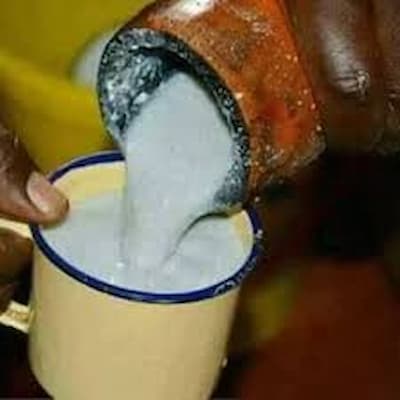
Mursik
Mursik

The staple Kalenjin food is Ugali. This is a cake-like, starchy food that is made from white cornmeal mixed with boiling water and stirred vigorously while cooking. It is eaten with the hands and is often served with cooked green vegetables such as kale. Less frequently it is served with roasted goat meat, beef, or chicken. Before the introduction and widespread diffusion of corn in recent times, millet and sorghum (native African grains) were staple cereals.

All of these grains were, and still are, used to make a very thick beer that has a relatively low alcohol content. Another popular beverage is Mursik. This consists of fermented whole milk that has been stored in a special gourd, and cleaned by using a burning stick. The result is that the milk is infused with tiny bits of charcoal.

Lunch and dinner are the main meals of the day. Breakfast usually consists of tea (with milk and sugar) and leftovers from the previous night’s meal, or perhaps some store-bought bread. Meal times, as well as the habit of tea drinking, were adopted from the British colonial period. Lunch and dinner are both eaten late by American standards. In addition to bread, people routinely buy foodstuffs such as sugar, tea leaves, cooking fat, sodas (most often Orange Fanta and Coca-Cola), and other items that they do not produce themselves.

Kalenjin Tribe Marriage.

Traditionally, the marriage took place in two stages: Ratet, a small ceremony after which the couple lived together, and Tunisiet , a large public feast held only at the completion of bride-wealth payment. Among the Nandi, these stages have typically occurred in rapid succession since about the turn of the twentieth century; among some other Kalenjin, at least during certain periods, a separation of many years has been customary, probably depending on availability of cattle or other livestock.

Most Kalenjin—with some exceptions, notably the Okiek—pay bride-wealth in cattle. Once payment is complete, marriage is theoretically irrevocable. Traditional divorce grounds and proceedings exist, but divorce is in fact extremely rare, even in modern times. Permanent separations occur but do not technically negate marriage.

Kalenjin Women

Polygamy is prestigious and, in the 1970s, was practiced by about 25 percent of ever-married Nandi men. Christians were monogamous slightly more frequently than non-Christians. Woman-woman marriage, found among Nandi, Kipsigis, and, since about the mid-twentieth century, among Keiyo, is not customary among other Kalenjin.

Both women and men are active in negotiating marriages and reconciling separated couples. Husbands are jurally dominant, with the right to beat wives for certain offenses. Wives are publicly deferential; private relations are more nearly egalitarian. Leisure is spent with same-gender companions more than with one’s spouse.

Kalenjin Tribe Ladies

Domestic Unit. Each wife has her own field, cattle, and house within the family compound. A separate farm for each wife is ideal. Compounds may include the husband’s parents or mother, and other kin, depending on circumstances. Brothers and their wives may share a compound, although this is rare.

Inheritance. Traditional norms of cattle inheritance have been extended to land, money, and other property. Each wife’s house property consists of cattle given to her at marriage, acquired by her on her own, or given as bride-wealth for her daughters. These may be inherited only by her own sons (or, in Nandi and Kipsigis, the sons of her wife). A man’s other property is inherited in equal shares by each wife’s house. Failing lineal heirs, a man’s property reverts to his brothers or their sons, a woman’s to her co-wives’ sons.

Kalenjin Runners – Kenya running tribe legends

Many legendary Kenyan long-distance runners are Kalenjins, including world-renowned athlete Kipchoge Keino, who was the first African to clinch a gold medal in the 1500m race in 1968. Though retired, Kipchoge Keino remains a Kenyan legend and sports icon.
Most of Kenya’s earliest running heroes were of Nandi descent. Kipchoge Keino and Mike Boit were both Nandi, as are latter-day stars Wilson Kipketer and Moses Tanui.

Tegla Loroupe, who holds the course record for the Quad-City Times Bix 7, as well as the world record in the women’s marathon, is of Pokot descent. Five-time world cross-country champion and world 10,000-meter record holder Paul Tergat is Tugen. Helen Kimaiyo, winner of the 1996 Bix 7, is Keiyo, and three-time world steeplechase champion Moses Kiptanui is Marakwet.

Though other Kenyan tribes have produced world-class athletes, the Kalenjins continue to dominate the marathon scene. Scientists have long speculated that the Kalenjin people have some kind of genetic predisposition towards distance running, though no concrete evidence has been established.

Kalenjin Tribe Social Problems

Cigarette smoking is common among Kalenjin men but not among women. The same is true for alcohol consumption. Commercially bottled beer is expensive, as are distilled spirits. The Kenyan government has banned the brewing and distillation of traditional homemade alcoholic beverages, including busaa, a beer made from fried, fermented corn and millet, and chang’aa, a liquor distilled from busaa.

Nevertheless, these beverages continue to be popular, especially with men, and they provide some individuals, mostly women, with supplementary income. Chang’aa can be lethal since there is no way to control the high alcohol content (unlike that of busaa, which tends to have a very low alcohol content), and there are many opportunities for contamination. It is very common to open the Kenyan daily newspapers and read stories of men dying after attending drinking parties.

Livestock rustling has always been part of Kalenjin culture, and this continues to be true. The difference is that now, instead of spears and bows and arrows, cattle rustlers use semiautomatic weapons such as AK 47 assault rifles.

Where did Kalenjin originate from?

The Kalenjin originated in the Nile River area of southern Sudan and western Ethiopia.

Kalenjin sub-tribes in numbers

  • Kipsigis (1.9 million)
  • Nandi (937,000)
  • Pokots (778,000)
  • Sebei (350,000)
  • Sabaot (296,000)
  • Keiyo (451,000)
  • Tugen (197,556)
  • Cherang’any 8,323
  • Marakwet (119,000)
  • Ogiek (52,000)
  • Terik (323,230)
  • Lembus (71,600)
  • Sengwer (10,800)

Kalenjin Clans List

  • Kipsigis
  • Nandi
  • Keiyo
  • Pokot
  • Marakwet
  • Sabaot
  • Ogiek
  • Lembus
  • Sengwer

Filed Under: Tribes Tagged With: Famous Ethnic Groups in Kenya

Maasai Tribe Guide: Origins, Migration, Culture, Traditions & Unique Customs

December 29, 2009 by Robert Njora

Maasai Tribe

Maasai Tribe (Swahili: Wamasai) are a Nilotic ethnic group occupying northern, central and southern Kenya and northern Tanzania, near the African Great Lakes region. Their born language is the Maasai language,a Nilotic language related to Dinka, Kalenjin and Nuer. Except for some elders living in rural areas, most Maasai people speak the official languages of Kenya and Tanzania—Swahili and English.

The Maasai residents has been reported as numbering 1,189,522 in Kenya in the 2019 census, approximated to 377,089 in the 1989 census, though many Maasai view the census as government meddling and consequently either refuse to partake or actively provide false information.

Maasai Tribe-Maasai People

The Maasai tribe are a Nilotic ethnic group inhabiting southern Kenya and northern Tanzania. They are among the best known local populations due to their residence near the many game parks of the African Great Lakes, and their distinctive customs and dress. The Maasai speak the Maa language and are a member of the Nilo-Saharan family that is related to Dinka and Nuer.

They are furthermore educated in the official languages of Kenya and Tanzania, Swahili and English. The Maasai population has been reported as numbering 841,622 in Kenya in the 2009 census, likened to 377,089 in the 1989 census.

Maasai Culture People Photo

The Tanzanian and Kenyan governments have instituted programs to encourage the Maasai to abandon their traditional semi-nomadic lifestyle, but the people have continued their age-old customs. Recently, Organizations have claimed that the lifestyle of the Maasai should be embraced as a response to climate change because of their ability to produce food in deserts and scrublands. Many Maasai tribes throughout Tanzania and Kenya welcome visits to their village to experience their culture, traditions, and lifestyle.

The Maasai people of East Africa live in southern Kenya and northern Tanzania along the Great Rift Valley on semi-arid and arid lands. The Maasai occupy a total land area of 160,000 square kilometers with a population of approximately one and a half million people.

The Maasai society is comprised of sixteen sections (known in Maasai as Iloshon): Ildamat, Ilpurko, Ilkeekonyokie, Iloitai, Ilkaputiei, Ilkankere, Isiria, Ilmoitanik, Iloodokilani, Iloitokitoki, Ilarusa, Ilmatatapato, Ilwuasinkishu, Kore, Parakuyu, and Ilkisonko, also known as Isikirari (Tanzania’s Maasai). There was also once Iltorobo section but was assimilated by other sections. A majority of the Maasai population lives in Kenya. Sections such as Isikirari, Parakuyu, Kore and Ilarusa lives in Tanzania.

Maasai Tribe-Origin, Migration and Assimilation

Based on the tribe’s oral history, the Maasai tribe derived north of Lake Turkana (north-west Kenya) in the lower Nile Valley. They started migrating south in the 15th century and reached in the long trunk of land stretching across central Tanzania and Northern Kenya during the 17th and 18 centuries. 

Many ethnic groups that had already formed settlements in the region were forcibly displaced by the incoming Maasai, while other, mainly Southern Cushitic groups, were assimilated into Maasai society. The Nilotic ancestors of the Kalenjin and Samburu likewise absorbed some early Cushitic populations.

Maasai Tribe Historical Adaptation

Tragedy struck the Maasai tribe at the turn of the century. An epidemic of deadly diseases attacked and killed large numbers of the Maasai’s animals. This was quickly followed by severe drought that lasted years. Over half of the Maasais and their animals perished during this period. Soon after, more than two-thirds of the Maasai’s land in Kenya was carried away by the British and the Kenyan government to create both ranches for settlers and Kenya and Tanzania’s wildlife reserves and national parks.

The Amboseli National Park, Nairobi National Park, Maasai Mara Game Reserve, Samburu, Lake Nakuru, and Tsavo National Parks in Kenya and the Manyara, Ngorongoro, Tarangire and Serengeti parks in Tanzania all stand on what was once the territory of the Maasai tribe.

Today, the Maasai people live on a smaller piece of land in the Kajiado and Narok districts, surrounded by these now Kenya’s fine game reserves. Many practice nomadic pastoralism, while others have been absorbed into modern day jobs working in tourism where they showcase their culture to visiting tourists.

Many Maasai people have moved away from the nomadic life to positions in commerce and government. Yet despite the sophisticated urban lifestyle they may lead, many will happily head homewards dressed in designer clothes, only to emerge from the traditional family homestead wearing a shuka (colourful piece of cloth), cow hide sandals and carrying a wooden club (o-rinka) – at ease with themselves.

Maasai Culture and Traditions

The warrior is of great importance as a source of pride in the Maasai culture. To be a Maasai is to be born into one of the world’s last great warrior cultures. From boyhood to adulthood, young Maasai boys begin to learn the responsibilities of being a man (helder) and a warrior. The role of a warrior is to protect their animals from human and animal predators, to build kraals (Maasai homes) and to provide security to their families.

Maasai Traditions – Maasai Circumcision

Among Maasai males, circumcision is practiced as a ritual of transition from boyhood to manhood. Women are also circumcised (as described below in social organization). This belief and practice are not uncommon to the Maasai. In rural Kenya, a group of 95 children aged between six months and two years were investigated in 1991/92. 87% were discovered to have undergone the removal of one or more deciduous canine tooth buds.

In an older age group (3–7 years of age), 72% of the 111 children examined displayed missing mandibular or maxillary deciduous canines. Young Maasai warrior (a junior Moran) with headdress and markings. Traditionally, the Maasai steered elaborate rite of passage rituals which include surgical genital mutilation to initiate children into adulthood. The Maa word for circumcision, “emorata,” is applied to this ritual for both males and females.

This ritual is generally performed by the elders, who use a honed knife and makeshift cattle hide bandages for the procedure.

The male ceremony refers to the excision of the prepuce (foreskin). In the male ceremony, the boy is expected to endure the operation in silence. Expressions of pain bring dishonor upon him, albeit only temporarily. Significantly, any exclamations or unexpected movements on the part of the boy can cause the elder to make a mistake in the delicate and tedious process, which can result in severe lifelong scarring, dysfunction, and pain

Maasai Culture Shelter

The Maasai tribe, historically a nomadic people, have traditionally relied on readily available materials and indigenous technology to construct their unusual and interesting housing. The traditional Maasai house was designed for people on the move and thus their houses were very impermanent. The Inkajijik (houses) are either circular or loaf-shaped, and are made by women.

Their villages are enveloped in a circular Enkang (fence) built by the men and this protects their cattle at night from wild animals.

Maasai Shelter Photo

Maasai Culture – Cultural Tours

Kenya’s safari tours enable both visiting tourists and native Kenyans to enjoy the country’s wildlife, while also exploring the Maasai’s rich cultural heritage by visiting their homes and attending Maasai cultural shows. These tours are held in Kenya’s game reserves, in particular, the Maasai Mara National reserve

The tours also provide an ideal opportunity for participants to take part in the Maasai dance and buy traditional Maasai jewelry, art and crafts to take home as souvenirs.

Maasai Way of Life

Maasai Clothing

Clothing varies by sex, age and place. Young men wear black for several months after their circumcision. Although, red is a favored color among the Maasai. Black, Blue, checked and striped cloth are also worn, together with mulitcoloured African garments. In the 1960s the Maasai began to replace sheep shin, calf hides and animal skin for more commercial material. The cloth used to wrap around the body is the called Shúkà in the Maa language.Contact a Siyabona Africa Consultant for more information on Kenya National Parks and Kenya safari accommodation options.

The milk and blood of their cattle continue to be the preferred diet of the Maasai, while the hides serve as mattresses, sandals, mats, and clothing. Cattle also act as marriage bonds, while a complex system of cattle-fines maintains social harmony. Visually stunning, the Maasai warrior with his swathe of scarlet shuka (blanket), beaded belt, dagger, intricately plaited hair, and one-legged stance remains the most enduring icon of Kenyan tourism That said, many a modern Maasai dons a suit for work but, come the weekend, and he ll be back in his beloved trad1t1onal dress.

Ear piercing and the stretching of earlobes are also part of Maasai beauty, and both men and women wear metal hoops on their stretched earlobes. Women shave their heads and remove two middle teeth on the lower jaw (for oral delivery of traditional medicine). The Maasai often walk barefooted or wear simple sandals made of cow hide.

Maasai Culture – Maasai Food

All of the Maasai’s needs for food are met by their cattle. They eat the meat, drink the milk and, on occasion, drink the blood. Bulls, oxen and lambs are slaughtered for meat on special occasions and for ceremonies. The by-products of the animals – skin and hides – are used as bedding while cow dung is used for building (it is smeared on the walls). The Maasai’s entire way of life truly revolves around their cattle.

The effects of modern civilization, education and western influence have not completely spared this unique and interesting tribe. Some of the Maasai tribe’s deep-rooted culture is slowly fading away. Customs, activities and rituals such as female circumcision and cattle raiding have been outlawed by modern legislation. Maasai children now have access to education and some Maasai have moved from their homeland to urban areas where they have secured jobs.

The Maasai tribe now occupy a much smaller area in the Kajiado and Narok districts as their vast territory has been taken over by some of Kenya’s game reserves. The Maasai’s territory now overlaps with the Serengeti plains in Tanzania and Maasai Mara National Reserve in Kenya – an area famous for the huge Wildebeest migration that take place every year, when up to a million animals move from the north end of the plains to the south. However, the Maasai’s authentic and intriguing culture is a tourist attraction on its own.

Maasai Food Photo
Maasai Food Photo

Maasai Tribe – Private Ownership

The concept of private ownership was, until recently, a foreign concept to the Maasai. However, in the 1960s and 1980s, a program of commercializing livestock and land was forced on us initially by the British and later by the government of Kenya. Since then, our land has been subdivided into group and individual ranches. In other parts of Maasai land people subdivided their ranches into small plots, which are sold to private developers.

The new land management system of individual ranches has economically polarized our people; some Maasais, as well as outside wealthy individuals, have substantially increased their wealth at the expense of others. The largest loss of land, however, has been to national parks and reserves, in which the Maasai people are restricted from accessing critical water sources, pasture, and salt lick. Subdivision of Maasai land reduced land size for cattle herding, reduced the number of cows per household, and reduced food production.

As a result, the Maasai society, which once was a proud and self-sufficient society, is now facing many socioeconomic and political challenges. The level of poverty among the Maasai people is beyond conceivable height. It is sad to see a society that had a long tradition of pride in being a beggar for relief food because of imposed foreign concepts of development.

Maasai Tribe – Social Responsibility

The Maasai live in Kraals arranged circularly. The fence around the kraal is made of acacia thorns, which prevent lions from attacking the cattle. It is a man’s responsibility to fence the kraal. While women construct the houses. Traditionally, kraals are shared by an extended family. However, due to the new land management system in the Maasai region, it is not uncommon to see a kraal occupied by a single family.

The Inkajijik (Maasai word for a house) are loaf-shaped and made of mud, sticks, grass, cow dung and cow’s urine. Women are responsible for making the houses as well as supplying water, collecting firewood, milking cattle and cooking for the family. Warriors are in charge of security while boys are responsible for herding livestock.

During the drought season, both warriors and boys assume the responsibility for herding livestock. The elders are directors and advisors for day-to-day activities. Every morning before livestock leave to graze, an elder who is the head of the inkang sits on his chair and announces the schedule for everyone to follow.

The Maasai are a semi-nomadic people who lived under a communal land management system. The movement of livestock is based on seasonal rotation. Contrary to many claims made by outsiders, particularly the Hardinian school of thought, this communal land management system allows us to utilize resources sustainably.

Each section manages its own territory. Under normal conditions, reserve pastures are fallowed and guarded by the warriors. However, if the dry season becomes especially harsh, sections boundaries are ignored and people graze animals throughout the land until the rainy season arrives. According to Maasai traditional land agreement, no one should be denied access to natural resources such as water and land.

Maasai Culture – Economic Activities

Livestock such as cattle, goats and sheep are the primary source of income for the Maasai. Livestock serves as a social utility and plays an important role in the Maasai economy. Livestock are traded for other livestock, cash or livestock products such as milk and siege. Individual, families, and clans established close ties through giving or exchanging of cattle. “Meishoo iyiook Enkai inkishu o-nkera”- so goes a Maasai prayer. The English translation of this prayer is: “May Creator give us cattle and children. Cattle and children are the most important aspect of the Maasai people.

The Maasai economy is increasingly dependent on the market economy. Livestock products are sold to other groups in Kenya for the purchase of beads, clothing and grains. Cows and goats are also sold for uniform and school fees for children. It is now common to see young Maasai men and women in major towns and cities of Kenya selling, not just goats and cows, but also beads, cell phones, charcoal, grain among other items. The entrepreneurial spirit is something new in our society.

It was not until the early 1980s with the Group Ranch project that we became much more entrenched in a market economy and, hence, more impoverished generally speaking.

Maasai Tribe- Music and Dance

Maasai music traditionally consists of rhythms provided by a chorus of vocalists singing harmonies while a song leader, or olaranyani, sings the melody. The olaranyani is usually the singer who can best sing that song, although several individuals may lead a song. The olaranyani begins by singing a line or title (namba) of a song.

The group will respond with one unanimous call in acknowledgment, and the olaranyani will sing a verse over the group’s rhythmic throat singing. Each song has its specific namba structure based on call-and-response. Common rhythms are variations of 5/4, 6/4 and 3/4 time signatures.

Lyrics follow a typical theme and are often repeated verbatim over time. Neck movements accompany singing. When breathing out the head is leaned forward. The head is tilted back for an inward breath. Overall the effect is one of polyphonic syncopation. Unlike most other African tribes, Maasai widely use drone polyphony.

Maasai Women

Women chant lullabies, humming songs, and songs praising their sons. Nambas, the call-and-response pattern, repetition of nonsense phrases, monophonic melodies repeated phrases following each verse being sung on a descending scale, and singers responding to their own verses are characteristic of singing by females. When many Maasai women gather together, they sing and dance among themselves.

One exception to the vocal nature of Maasai music is the use of the horn of the Greater Kudu to summon Morans for the Eunoto ceremony.

Both singing and dancing sometimes occur around Manyattas, and involve flirting. Young men will form a line and chant rhythmically, “Oooooh-yah”, with a growl and staccato cough along with the thrust and withdrawal of their lower bodies. Girls stand in front of the men and make the same pelvis lunges while singing a high dying fall of “Oiiiyo..yo” in counterpoint to the men. Although bodies come in close proximity, they do not touch.

The Maasai Dance

Eunoto, the coming of age ceremony of the warrior, can involve ten or more days of singing, dancing and ritual. The warriors of the Il-Oodokilani perform a kind of march-past as well as the Adumu, or Aigus, sometimes referred as “the jumping dance” by non-Maasai. (both Adumu and Aigus) are Maa verbs meaning “to jump” with Adumu meaning “To jump up and down in a dance?

Warriors are well known for, and often photographed during this competitive jumping. A circle is formed by the warriors, and one or two at a time will enter the center to begin jumping while maintaining a narrow posture, never letting their heels touch the ground. Members of the group may raise the pitch of their voices based on the height of the jump.

Maasai Ladies

The girlfriends of the Moran (intoyie) parade themselves in their most spectacular costumes as part of the Eunoto. The mothers of the Moran sing and dance in tribute to the courage and daring of their sons.

Interesting Maasai Facts

  • Cattle play an important role in Maasai life. It is their primary source of food.A man’s wealth is measured in terms of cattle he owns and children he has.
  • The Maasai are semi-nomadic which is a result of their raising cattle and the need to find new grazing land.
  • Maasai families live in an enclosure called a Enkang which typically contains ten to twenty small huts. The enclosure is protected by a fence or bushes with sharp thorns.
  • Maasai huts are very small, with usually only one or two rooms and not high enough for these tall people to stand.
  • Traditionally these people of Africa do not bury their dead. Burials are believed to harm the soil and is reserved only for some chiefs. Most dead bodies are simply left outside for scavengers.
  • In the mid 1800’s the Maasai territory reached its greatest size. It covered almost all of the great rift valley and several other adjacent lands.
  • It is widely believed the Maasai people originated in the Nile valley. It is believed these people of Africa left the Nile Valley in the 15th or 16th century reaching their current home in the Great Rift Valley around the 17th or 18th century

Maasai Tribe- The Keepers of God’s cattle

It’s one of Kenya’s most iconic images, the Maasai warrior in his traditional pose, spear in hand, scarlet shuka cloak thrown over his shoulder, one leg raised to rest on the other, gaze turned to the far horizon. Certainly the most visually striking of the colourful tribes of Kenya, the Nilo-Hamitic Maasai are a nomadic people whose style of life has remained unchanged for centuries and is still dictated by the constant quest for water and grazing land for their cattle.

Called ‘Maasai ‘after their form of speech, which is known as ‘Maa’, the Maasai are renowned for their bravery. They are also distinguished by their complex character, good manners, impressive presence and almost mystical love of their cattle. These days ‘I hope your cattle are well’ is still the most common form of Maasai greeting, whilst milk and blood remains the traditional Maasai diet.

Cowhides provide such things as mattresses, live cattle establish marriage bonds, and a complex system of cattle-fines maintains social harmony. Thought to have migrated to Kenya from the lower valleys of the Nile, the Maasai encountered a troubled history in their adopted home.

Firstly their people were decimated by famine and disease, secondly they lost many of their cattle to the scourge of rinderpest, thirdly their development was affected by the arrival of the European explorers and, finally, they lost much of their land to the influx of British colonialist settlers. Nor did their dispossession end there, because in recent years they have also had to endure the steady shrinkage of their ancestral lands thanks to urban settlement and the establishment of the National Parks and Reserves.

Undeterred, however, the Maasai have risen to the challenge. Many have entered into cooperative ventures with the tourism industry and created lodges and conservancies on their land. And, rather than killing lions as was the custom of the young warriors of the past, the morans of today are actively engaged in protecting them. Some things, however, never change – such as the Maasai love of their cattle.

No matter how large the herd, each cow will have a name and a lineage. And only in the harshest of circumstances will a Maasai part with a single animal. Why do the Maasai love their cattle so dearly? Perhaps the best explanation is given by the Maasai themselves in the following folk tale.

In the beginning, the Maasai did not have any cattle. Then one day God called to Maasinta, who was the first Maasai, and said to him, ‘I want you to make a large enclosure, and when you have done so, come back and inform me’. Maasinta went and did as he was instructed. Then, God said, ‘tomorrow, very early in the morning, go and stand in the enclosure and I will give you something called cattle. But keep very silent no matter what you might see or hear.’

Very early in the morning, Maasinta went to the enclosure and waited. Suddenly there was a great clap of thunder and a leather thong descended from heaven. Down it descended hundreds of cattle in all the colours of brown and black, some with great horns, others with velvet dewlaps. Meanwhile the earth shook so violently that Maasinta’s house nearly fell over and he was gripped with tremendous fear, but he did not make a sound.

It was at this moment that Dorobo, who shared the house with Maasinta, woke from his sleep and went outside. There, seeing the cattle descending down the leather thong, he let out a great shriek.

Immediately God withdrew the thong into heaven and, thinking that it was Maasinta who had shrieked, He said to him, ‘what’s the matter? Are these cattle not enough for you? If that is the case, I will never send anymore – so you had better love these cattle in the same way that I love you.’ And that is why the Maasai love their cattle so much.

Walking with the Masai

‘To understand a man, you must walk a mile in his moccasins’, or so says the native American proverb. Journalist and travel writer, Stuart Butler, doesn’t adopt the traditional Maasai footwear known as ‘thousand milers’, which are sandals made out of old car tyres, but he does walk many miles across Maasailand in the company of his Masai friend, Josphat Mako. And his understanding of the Maasai culture is enhanced with every step he takes.

10 facts about the Maasai tribe

  • They are lion hunter.
  • After death rituals.
  • They are nomads.God has given them all the cattle.
  • The wealth is measured in terms of cattle.
  • There are about one million of them.
  • Their clothing & ornaments.
  • They don’t eat meat but drink the fresh blood of the animals.
  • Maasai jumping dance fact.
  • They have learned to live with the lions and other predators.

Filed Under: About Kenya, Tribes Tagged With: Famous Ethnic Groups in Kenya

  • « Go to Previous Page
  • Page 1
  • Page 2

Primary Sidebar

Recent Posts

Mount Elgon National Park

Luhya Tribe

Luhya Tribe Guide: History, Sub-Tribes, Language, and Traditions

Kikuyu Tribe

Kikuyu Tribe Guide: History, Clans, Myths, Language and Culture

Akamba People

Akamba Tribe Guide: History, Clans, Culture, Music & Witchcraft

Meru Tribe

Meru Tribe Guide: Population, Names, Taboos & Clans

Uhuru Gardens

Uhuru Gardens Guide: Monument, Best Activities, Directions & Entry Fee

Places to Visit in Nairobi

Places to Visit in Nairobi Guide: Top Attractions, Hidden Gems &Travel Tips

Mombasa Beaches

Mombasa Beaches Guide: Culture, Best Beaches, Activities & Resorts


Home | About Us | Contact Us| Privacy Policy

Copyright © 2026 · Powerd by . InformationCradle · Log in